

Axle-less suspension is the most important spec on your off-road camping trailer.
Table of Contents
Most people shopping for an off-road camper trailer spend their time looking at the wrong things. They’re staring at the kitchen setup, counting amp-hours, measuring the mattress. All important stuff, sure. But the single spec that determines whether your rig actually survives the terrain you’re dragging it across, and whether your gear inside makes it in one piece, is suspension. Specifically, whether you have a solid axle or axle-less independent suspension.
This is the thing almost nobody explains clearly. So let’s fix that.
The Traditional Setup: Solid Axle Trailers
The vast majority of trailers on the market, camping trailers, utility trailers, horse trailers, most “off-road” trailers from manufacturers who don’t actually go off-road, are built on a solid axle. It’s cheap, it’s simple, and it works fine on pavement.
Here’s how it works: a single steel tube runs from one wheel to the other. Both wheels are rigidly connected. The whole assembly is attached to the trailer frame with leaf springs.
On flat ground or a smooth road? You’ll never notice the difference. But take that setup onto washboard dirt roads, rocky mountain trails, or any terrain with meaningful variation side-to-side, and the physics turn against you fast.
The Problem With Solid Axles Off-Road
When one wheel hits an obstacle, a rock, a ledge, a deep rut, the impact transfers directly through the axle to the opposite wheel. Because both wheels are locked together, the trailer frame gets the full shock. Every single hit. Over and over, for hours, on the kind of roads that lead you to actual backcountry camping.
Here’s what that does over time:
- Welds crack — the frame flexes repeatedly and metal fatigue sets in at stress points
- Bolts loosen — vibration over washboard is relentless and works fasteners free
- Cabinetry fails — interior components weren’t designed for sustained impact
- Water seals break — seams and windows flex and lose their seal, then leak
- Gear takes a beating — everything inside your trailer is getting shaken continuously
On a solid axle setup, if one wheel drops 6 inches into a rut, the other wheel lifts 6 inches off the ground. The trailer torques. The frame twists. That torsional load is exactly what breaks trailers.
Axle-Less Suspension: What It Actually Is
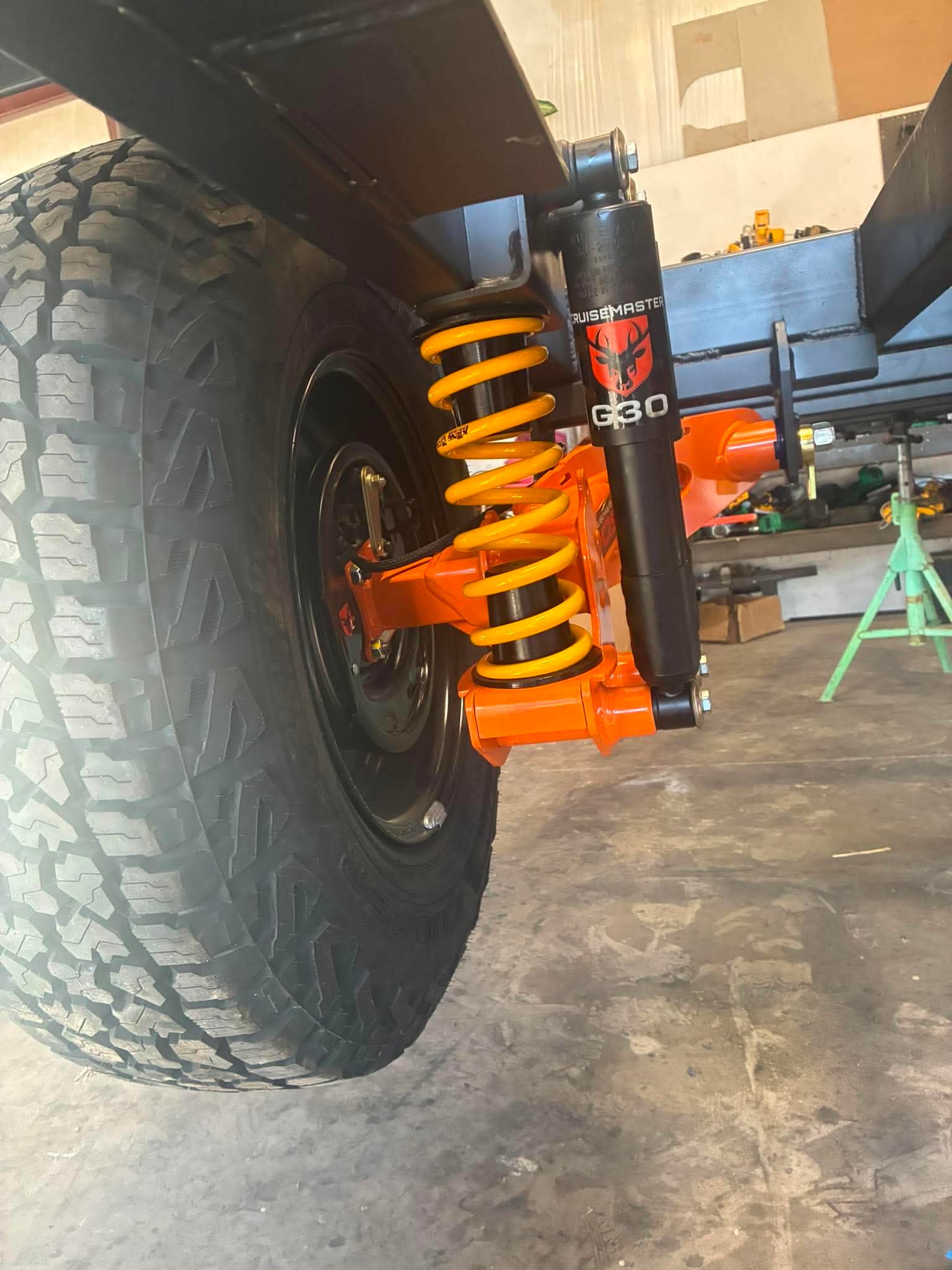
Axle-less suspension eliminates the axle entirely. Instead of a solid tube connecting both wheels, each wheel is mounted on its own independent arm, with its own independent spring and shock absorber. The two sides of the trailer have no rigid mechanical connection at wheel level.
This changes everything about how the trailer behaves on rough terrain.
When one wheel hits a rock, that wheel absorbs the impact on its own. The opposite wheel keeps rolling normally. The trailer frame sees a fraction of the force it would have with a solid axle. The shock is absorbed, not transmitted.
The Real-World Difference
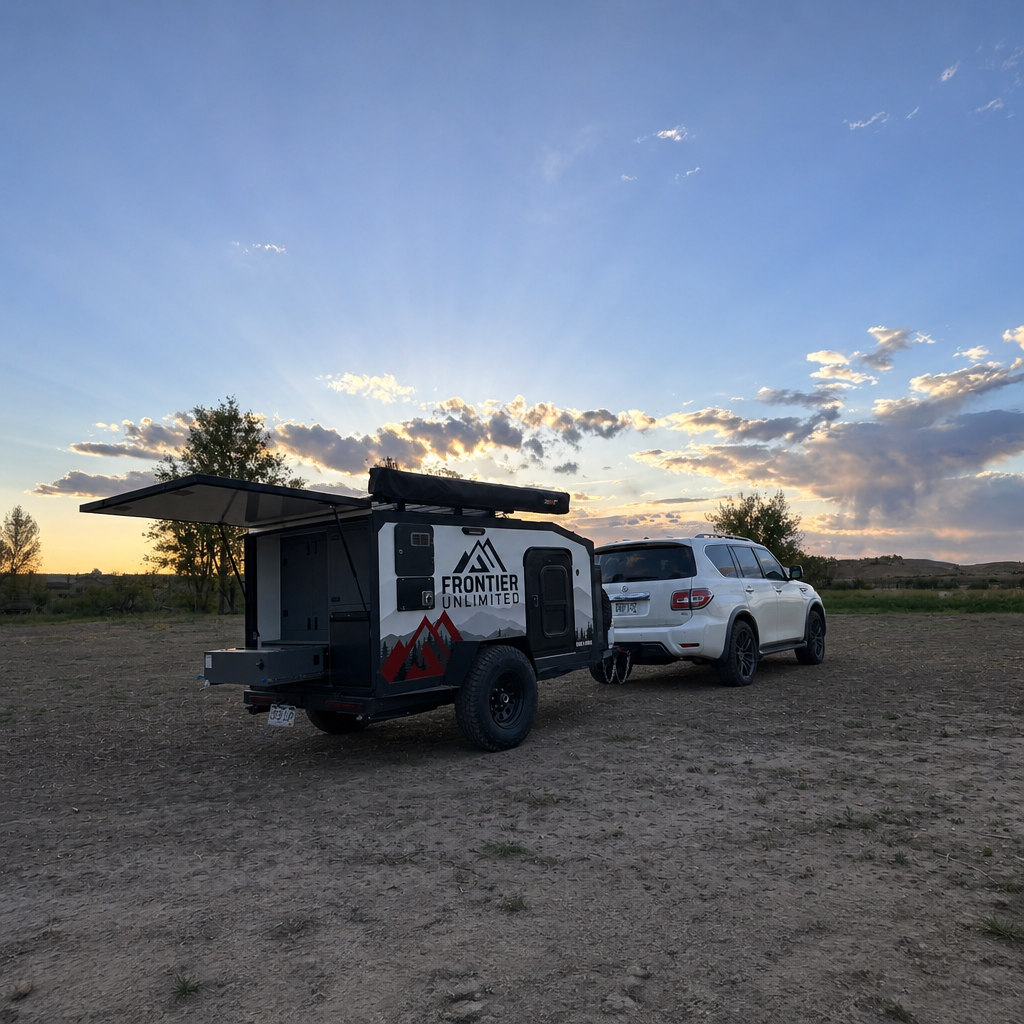
Picture this: you’re on a two-track in the mountains, headed to camp. The left wheels are running along the high side of a slope, the right side is dropping into a series of embedded rocks. On a solid axle trailer, every one of those impacts cycles through the entire chassis. After two hours of that, things start working loose.
On an axle-less suspension, the right wheels are independently absorbing each rock while the left side rolls smooth. The frame stays level. The interior stays intact. You roll in to camp and nothing needs re-tightening.
That’s not a hypothetical. That’s physics.
Cruisemaster CRS2: What We Run on the ROCH
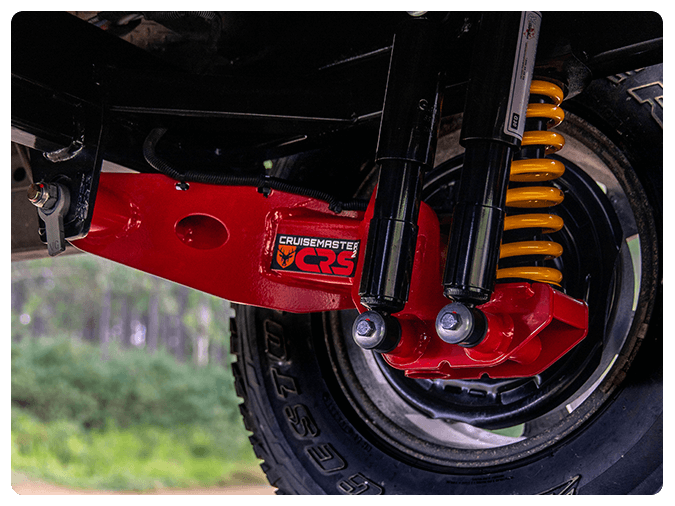
Not all axle-less suspension is created equal. There are budget versions that get the basic concept right but use undersized components that wear out, flex too much under load, or can’t handle the payload ratings you actually need on a fully loaded camper.
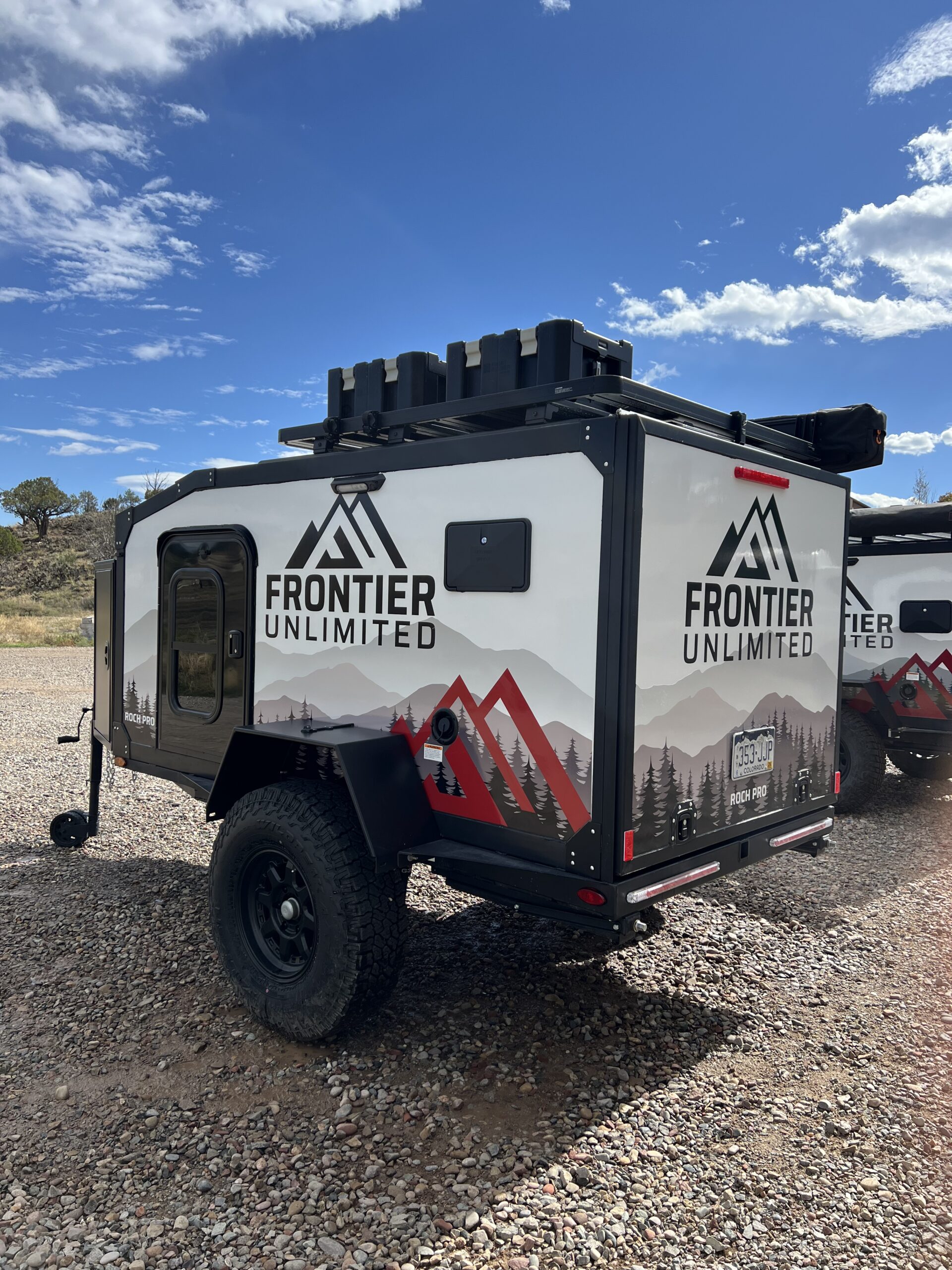
The ROCH Pro and ROCH Chassis both run Cruisemaster CRS2 axle-less suspension. Cruisemaster is an Australian company — and if you know anything about serious off-road trailer engineering, you know that Australia is where the hardest standards come from. The Australian outback isn’t forgiving of weak engineering, and Cruisemaster has been building running gear for hard-use trailers for decades.
The CRS2 is engineered specifically for loaded off-road trailers. It provides genuine independent wheel travel, handles the rated payload capacity of the ROCH without complaint, and is built from components that don’t need constant attention. It’s not a marketing feature. It’s running gear that trailer builders who actually go off-road choose when they don’t want callbacks.
What CRS2 Gives You Specifically
- Independent wheel travel that isolates impacts between sides
- Full suspension articulation on severely uneven ground
- Correct load rating for the ROCH’s 3,500 lb GVWR
- Proven durability in real off-road conditions, not just marketing copy
- Lower center of gravity than most leaf-spring solid axle setups
Ground Clearance: The Other Half of the Off-Road Equation
Suspension handles flex and articulation. Ground clearance handles what you can physically drive over. You need both.
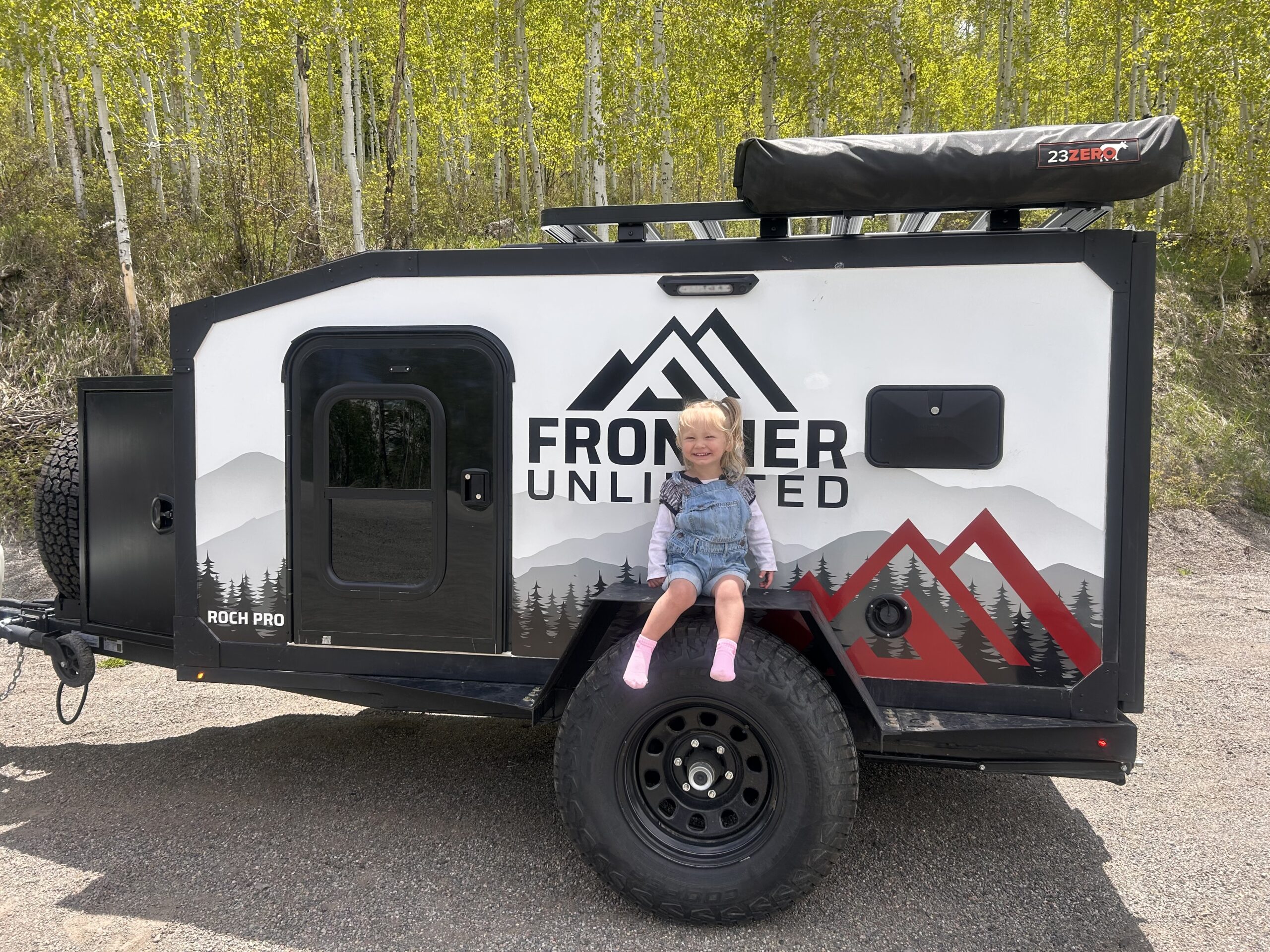
The ROCH Pro runs 20 inches of ground clearance. The ROCH Chassis gives you 23 inches. For reference, most consumer travel trailers run 10-12 inches. Standard off-road truck clearance is 8-10 inches stock.
Those extra inches aren’t theoretical. They’re the difference between getting hung up on a rock shelf in the middle of a trail and clearing it clean. When you’re 30 miles from civilization and your undercarriage contacts something solid, you have a very bad day. When you’ve got 20+ inches of clearance and axle-less suspension that lets the wheels articulate below the frame, you keep moving.
The water tank on the ROCH Pro is protected by an aluminum skid plate. Because at 20 inches of clearance, you’re going places where the bottom of your trailer occasionally meets the terrain. The skid plate means that meeting doesn’t end your water supply.
What to Ask Any Trailer Manufacturer About Suspension
If you’re comparing trailers, here are the questions that separate real off-road rigs from trailers with some off-road marketing on them:
- Solid axle or axle-less? If it’s solid axle, understand what you’re getting into.
- What brand and model suspension? Vague answers mean budget components.
- What is the rated suspension travel? More travel = better articulation on rough terrain.
- What’s the payload capacity? Make sure the suspension is rated for the full GVWR, not just the curb weight.
- Has this been tested loaded on real terrain? Or just on smooth roads at a factory?
We built the ROCH after breaking every other trailer we owned. Axle-less suspension on quality hardware was non-negotiable from day one. We don’t consider it an upgrade, it’s necessity, the baseline.
See the full running gear specs on the ROCH Pro here or the standalone platform here. Compare models here.
No limits. No neighbors. No compromises on suspension.
Leave a Reply