

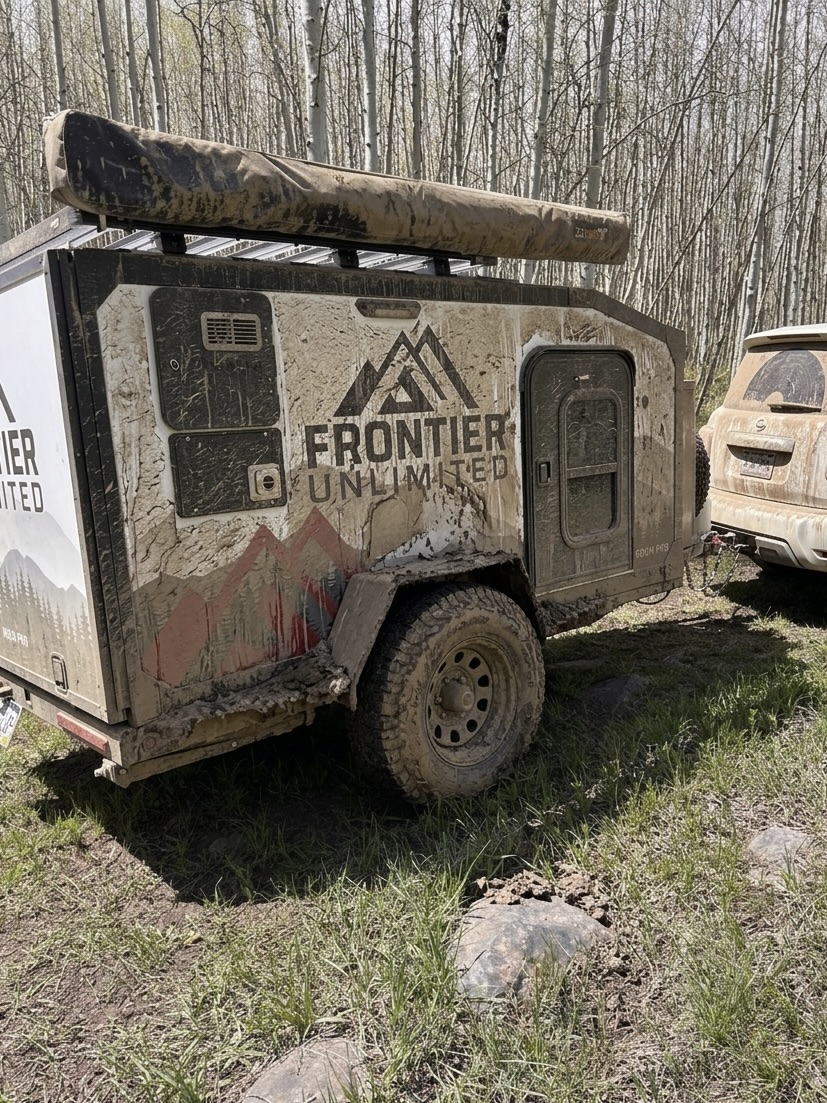
This Overland Expo Mountain West buyer’s guide breaks down what to check before you buy an off-road camper — before the show hits The Ranch in Loveland, Colorado, August 21-23, 2026. Last year’s show had 18,000 attendees and 347 exhibitors from 49 states and 9 countries. Organizers already have 300-plus exhibitors confirmed for this year, we are one of them. It’s the biggest overland gathering between the coasts, just an hour from Rocky Mountain National Park and just under an hour from Denver.
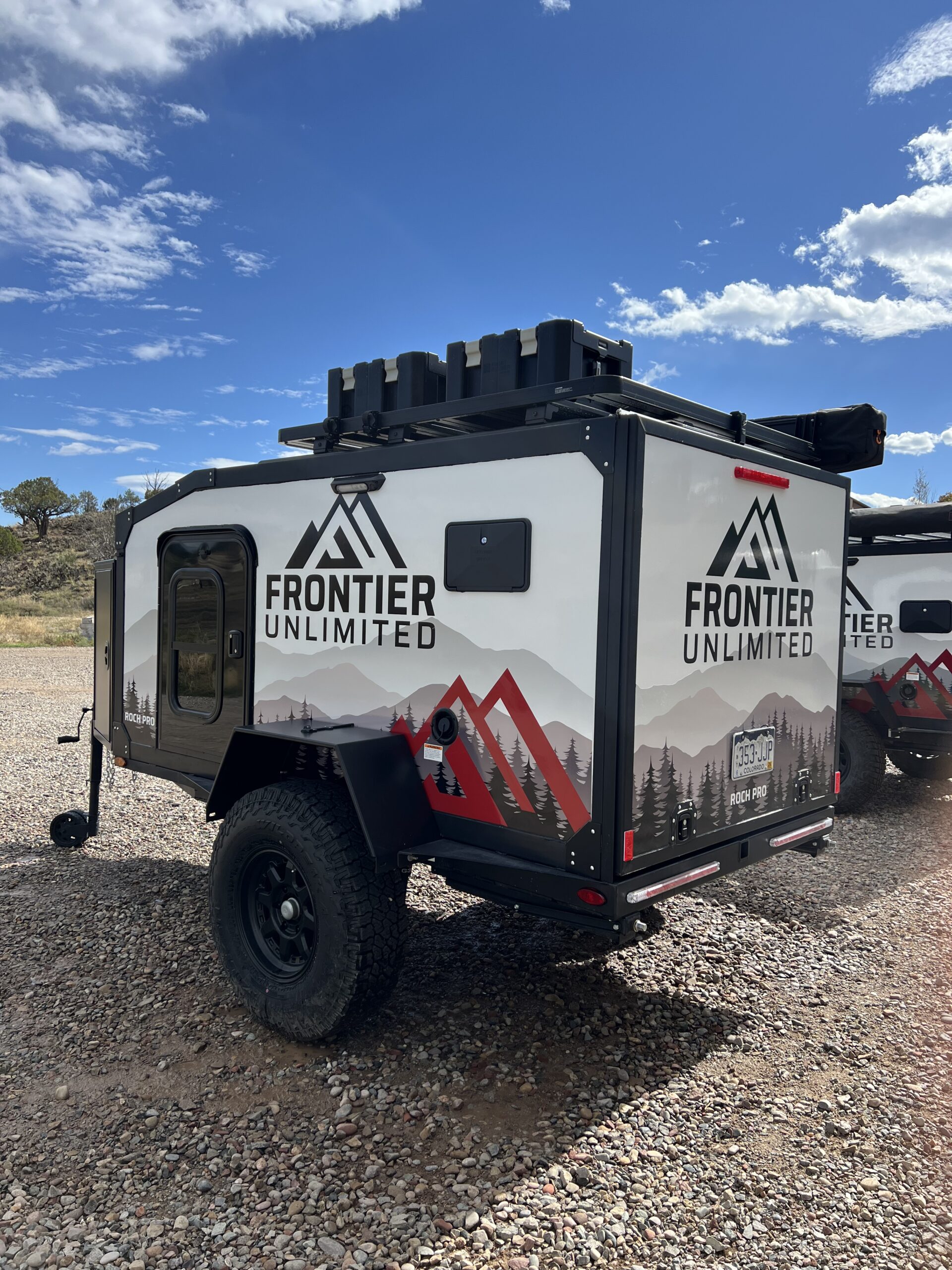
Frontier Unlimited will be there. We’d love to see you and show you around our Roch off-road camper. It’s a beast and meant to last forever. Before you walk the expo, know what you’re looking at. Here’s what actually matters and what to ask before you sign anything.
The Specs That Actually Matter
Every builder at Overland Expo West (OEX) will hand you a spec sheet. Most of it is filler. That’s why we wrote the Overland Expo Mountain West Buyer’s Guide. Here’s what to actually ask…
Chassis. Steel or aluminum, and how it’s built. A CNC-cut frame holds tighter tolerances than a hand-cut one. CNC cutting also means every joint lines up exact, the first time. Industrial powder coat seals the steel against rust and takes rock strikes without peeling. The ROCH Pro’s coating is rated 500 hours in ASTM B-117 salt spray testing. Ask how the frame is cut and what the coating is rated for, not just “steel frame.”
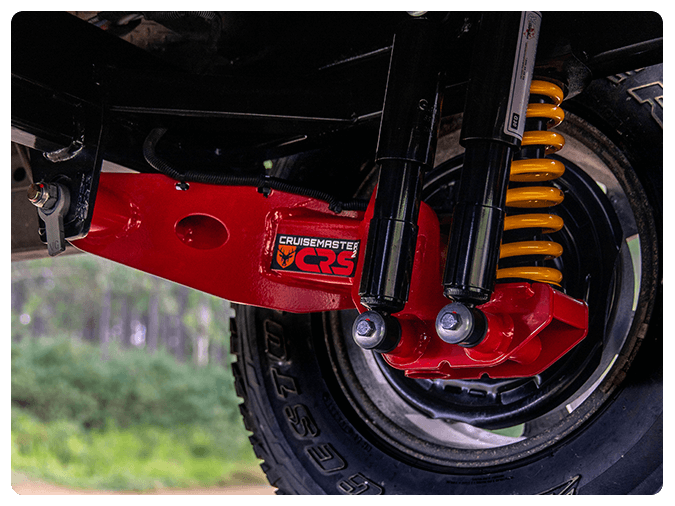
Suspension. Leaf springs flex less and transmit more shock straight into the cabin. Independent trailing-arm suspension isolates each wheel and holds up better on washboard roads. Ask the brand name, FU uses Cruisemaster CRS2. “Independent suspension” without a name behind it is a design description, not a product.
Panel construction. Wood-based panels rot, mold, and add weight when they take on moisture. Composite, wood-free panels don’t. Ask what’s inside the wall, not just what’s on it.
Batteries. Lithium (LiFePO4) is the standard now. AGM still shows up in campers priced to move fast. Frontier Unlimited runs two Go Power Smart Lithium batteries, 200Ah total. Ask the chemistry and the amp-hour rating, not just “lithium-ready.”
Hitch. Standard ball hitches transfer every bump straight to the tow vehicle. Articulating or off-road-rated hitches don’t. Frontier Unlimited runs the Cruisemaster DO35 hitch coupler with parking brake. If a builder doesn’t mention the hitch, ask.
Certification. RVIA certification means the unit passed third-party inspection on electrical, LP gas, and structural systems. No certification doesn’t automatically mean a bad build, but it means nobody verified it. Ask about certification.
Weight numbers. Dry weight is what you tow empty. GVWR is the max the axle and frame can carry loaded. Cargo capacity is the gap between them. Frontier Unlimited’s ROCH Pro runs an 880 lb curb weight and a 3,500 lb GVWR — a 2,620 lb payload capacity, roughly double what comparable trailers in this GVWR class carry. A builder that only quotes dry weight is hiding the number that decides what you can actually pack.
Ground clearance. This is what keeps the belly of the trailer off rocks, ruts, and washouts on the actual trails this show is built around. The ROCH Pro sits at 23″ of ground clearance. Anything under that starts scraping on terrain a lot of overland routes consider mild.
Marketing Words That Mean Nothing
These show up on banners and spec sheets across the board everywhere. You might even see them on our very minimal “marketing” materials. None of these are specs. If you hear one, ask for the number behind it.
- “Revolutionary” — ask what changed and how. If you see us, ask us, we have a laundry list of what we changed over the past 3 years to get to the “ultimate” machine that is the Roch.
- “Ultimate” — ask by what measurement. As the KelloggShow family, FU has tested the Roch under extreme duress, more than 100,000 miles of off-road time!
- “Unbreakable” — ask for the warranty terms, since no one warranties unbreakable.
- “Best-in-class” — ask what class, and what it’s being measured against.
- “Game-changing” — For fun, ask what game, and what it changed. For us, the Roch ended the constant need to fix things, we’ve broken axles and cabinets and hitches and more. We built the Roch and it changed the game for us.
A builder who knows their product will answer with numbers.. A builder who doesn’t will repeat the adjective.
What to Ask Before You Hand Over a Deposit
Write these down. Ask every builder the same list. Compare the answers, not the booths.
- What’s the chassis warranty, in years, and what specifically voids it?
- Who makes the suspension, and is it their part or a house-branded generic?
- What’s the current build lead time, and is that date in the contract?
- Is the warranty transferable if I sell the trailer?
- What’s included in the base price, and what’s an add-on?
- How long was this design tested before it went to market, and who’s actually building it?
If a builder won’t answer any of these, that’s the answer.
Find Us in Loveland
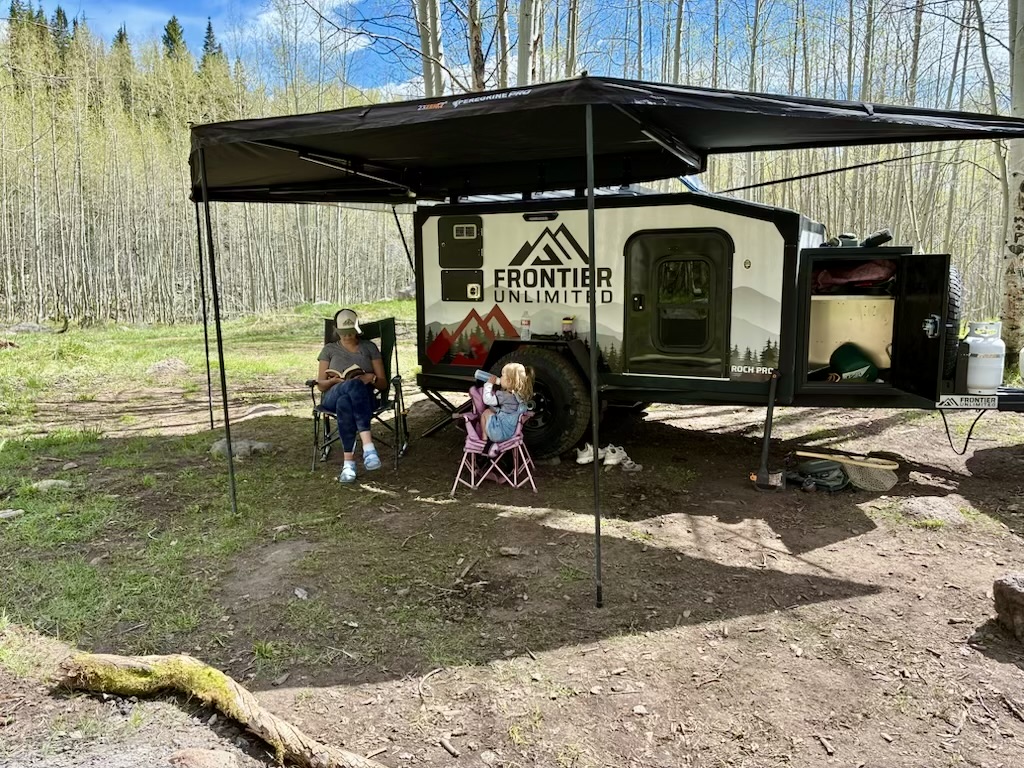
We’ll be at Booth E130, August 21-23, with the ROCH Pro on display. Come look at the chassis. Ask every question on our Overland Expo Mountain West Buyer’s Guide.and more. We personally build our off road campers and have been testing them, putting them through absolute hell for three years!! We know them inside and out. Ask away. If you catch us and we have to look something up or we have to ask one of our other builders, we will give you a hat!!
Frequently Asked Questions
What chassis specs should I look for in an off-road camper?
Ask whether the frame is CNC-cut or hand-cut. CNC cutting holds tighter tolerances — every joint lines up exact, every time. Then ask about the coating. Industrial powder coat should be rated for salt spray testing (look for ASTM B-117 ratings). The ROCH Pro’s coating is rated 500 hours in ASTM B-117 salt spray testing. “Steel frame” is not a spec. The cut method and coating rating are.
What kind of suspension does an off-road camper need?
Independent trailing-arm suspension isolates each wheel and holds up significantly better on washboard roads than leaf springs, which transmit shock directly into the cabin. Ask for the brand name — not just “independent suspension.” That’s a design description, not a product. Frontier Unlimited runs Cruisemaster CRS2 suspension.
Why does panel construction matter in an off-road camper?
Wood-based panels rot, mold, and add weight when they absorb moisture. Composite, wood-free panels don’t. Ask what’s inside the wall, not just what’s on the surface. A good-looking exterior finish doesn’t tell you what’s behind it.
What battery type should an off-road camper have?
Lithium (LiFePO4) is the standard for serious off-grid use. AGM still shows up in campers priced to move fast — cheaper upfront, heavier, less usable capacity. Ask for the chemistry and the amp-hour rating, not just “lithium-ready.” Frontier Unlimited runs two Go Power Smart Lithium batteries, 200Ah total.
What hitch type do I need for off-road towing?
A standard ball hitch transfers every bump straight to your tow vehicle. Articulating or off-road-rated hitch couplers allow movement between trailer and tow vehicle, reducing stress on both. If a builder doesn’t mention the hitch coupler by name, ask. Frontier Unlimited runs the Cruisemaster DO35 hitch coupler with parking brake.
What is RVIA certification and does it matter?
RVIA certification means the unit was inspected by a third party and passed standards for electrical systems, LP gas, and structural integrity. A non-certified build isn’t automatically bad — but nobody verified it. Ask every builder whether their unit is RVIA certified, and if not, why not.
What is GVWR and why does it matter more than dry weight?
Dry weight is what the trailer weighs empty. GVWR is the maximum the axle and frame can carry when fully loaded. The gap between them is your cargo capacity — what you can actually pack. A builder that only quotes dry weight is hiding the number that matters most. The ROCH Pro runs 880 lbs dry with a 3,500 lb GVWR — 2,620 lbs of payload, roughly double what comparable trailers in its class carry.
How much ground clearance does an off-road camper need?
Ground clearance is what keeps your belly off rocks, ruts, and washouts. Anything under 20 inches starts making contact on terrain most overland routes consider mild. The ROCH Pro sits at 23 inches of ground clearance. Ask for the exact number, not “high clearance.”
What marketing buzzwords should I ignore at Overland Expo?
“Revolutionary,” “ultimate,” “unbreakable,” “best-in-class,” and “game-changing” are adjectives, not specs. None of them mean anything without a number behind them. When you hear one, ask for the measurement. A builder who knows their product will give you one. A builder who doesn’t will repeat the word.
What questions should I ask before putting down a deposit on an off-road camper?
Ask every builder the same list: What’s the chassis warranty in years and what voids it? Who makes the suspension — named brand or house generic? What’s the build lead time and is it in the contract? Is the warranty transferable? What’s in the base price vs. add-ons? How long was this tested before it went to market? If a builder won’t answer any of these, that’s your answer.
Leave a Reply