

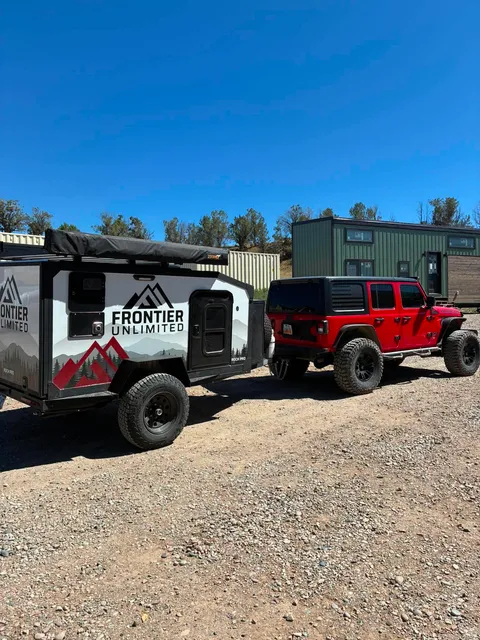
Off-road Camper Towing … the age old question. You and everyone else shopping for an off-road camper asks the same question first: “Will my truck pull it?”
We know these things. Here’s the answer.
Table of Contents
Two Numbers. Most People Only Know One.
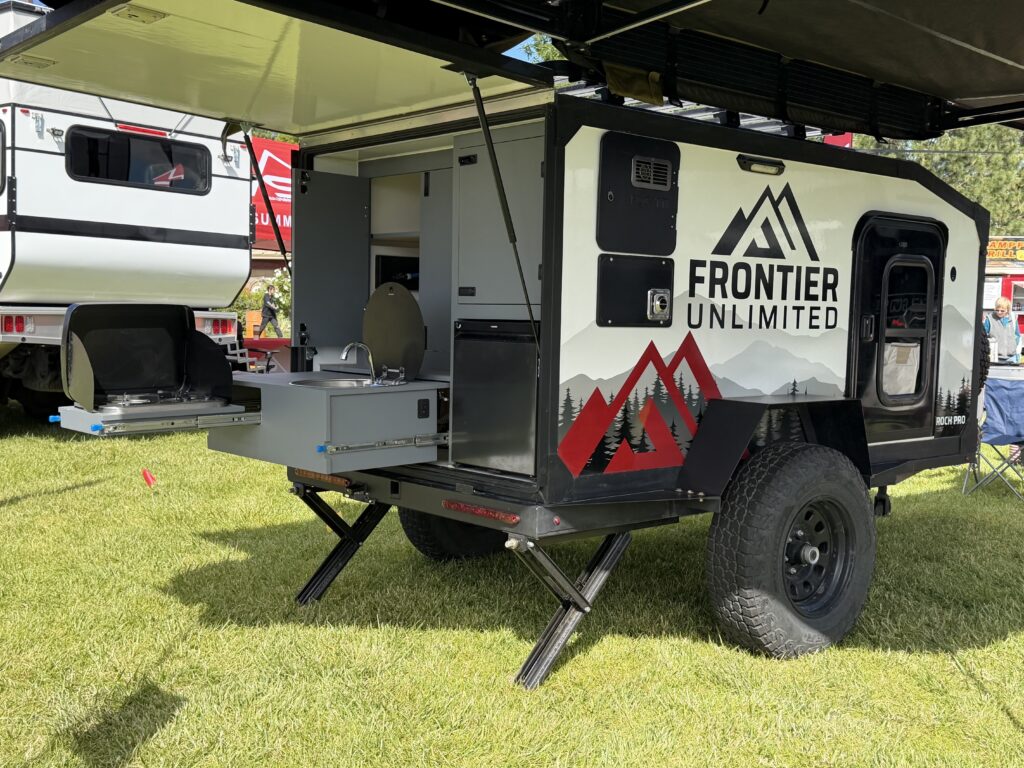
Every truck/vehicle has a tow rating. Most people know theirs. What most people don’t know is the second number, payload capacity, and that’s the one that will actually bite you.
Tow rating is the max your truck can pull behind it. Payload capacity is the max your truck can carry, in the cab, in the bed, and on the hitch. Those are two different limits, and you have to stay within both of them at the same time.
Here’s why payload matters for towing: tongue weight, the downward force the trailer puts on your hitch, counts against your truck’s payload. Not your tow rating. Your payload. Add a passenger, a cooler in the back seat, gear in the bed, and a loaded trailer on the hitch, and you can blow past your payload limit while still being well under your tow rating. That’s when things get dangerous and warranties get void.
What Your Truck Actually Carries
Advertised payload is the max a truck can be configured to carry. Your specific truck’s number is on a sticker inside the driver’s door jamb. That number is what matters. Not the brochure.
Here’s where common rigs land, roughly:
Ford F-150 — 1,500 to 2,200 lbs payload depending on cab, bed, engine, and options. Wide range. Check your sticker.
Ram 1500 — 1,400 to 2,300 lbs. Same story.
Chevy / GMC Silverado / Sierra 1500 — 1,500 to 2,280 lbs.
Toyota Tundra — 1,440 to 1,940 lbs.
Toyota Tacoma — 1,120 to 1,440 lbs. Tighter than most people think.
Chevy Colorado / GMC Canyon — 1,370 to 1,675 lbs.
Ford Ranger — 1,500 to 1,860 lbs.
Jeep Gladiator — 1,200 to 1,650 lbs.
These numbers vary by configuration. The only one that counts is on your door jamb.
What About SUVs and Crossovers?
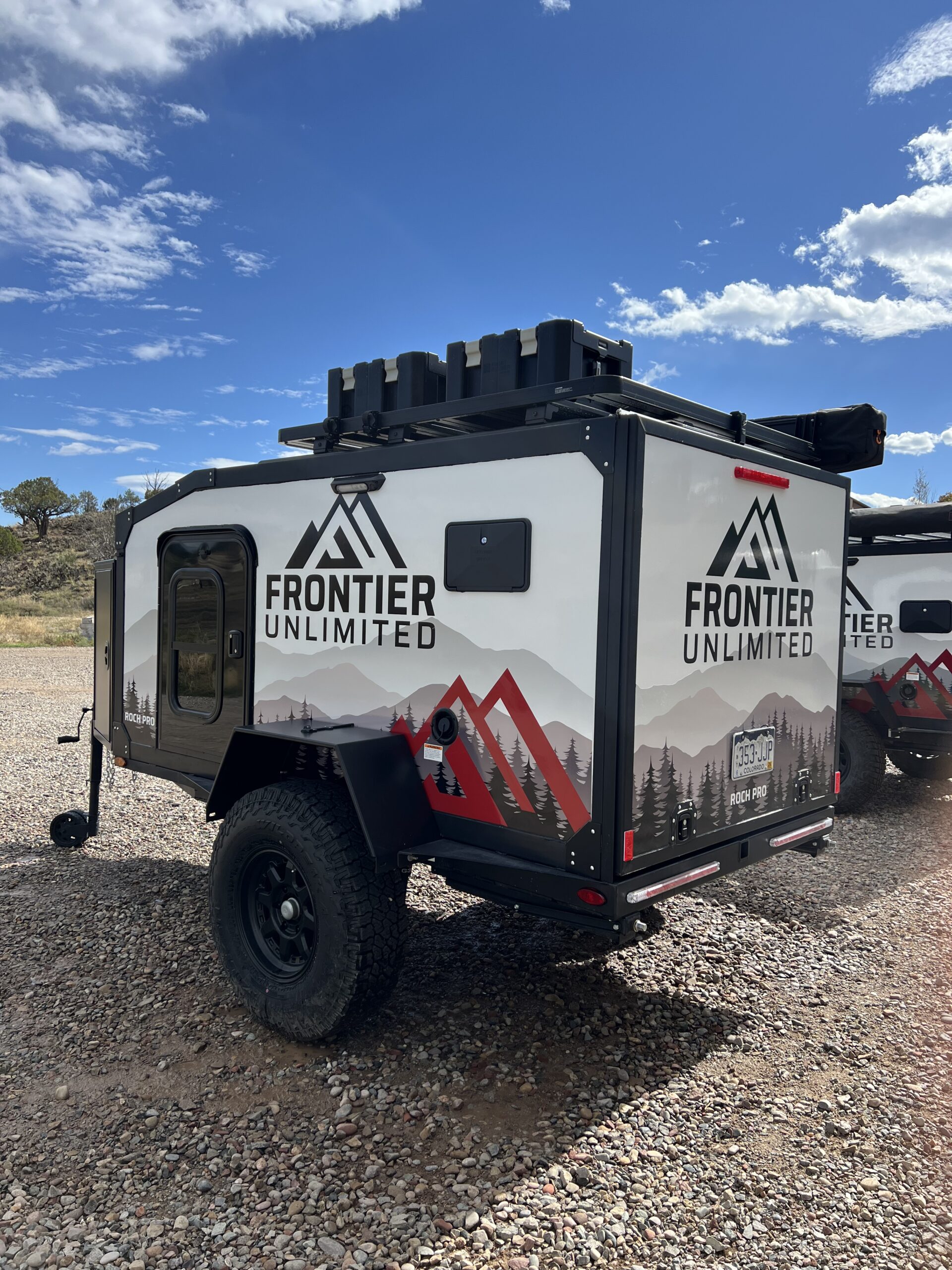
Not everybody shows up to the trailhead in a half-ton. If you’re running a Subaru Outback, Toyota 4Runner, Honda Pilot, Ford Bronco, Jeep Grand Cherokee, or RAV4, you’re not alone, and you’re not out of the game. The ROCH Pro’s 880 lb dry weight puts it in range for a lot of capable SUVs and crossovers. What changes the math is payload, same rule as always. Check your door jamb sticker, calculate tongue weight at 10–15% of your loaded trailer, add your passengers and gear, and see where you land.
Toyota 4Runner — 5,000 lb tow rating, ~1,500 lbs payload. Solid setup with a lightly loaded ROCH Pro.
Jeep Grand Cherokee — up to 7,200 lb tow rating, ~1,100–1,500 lbs payload. Depends heavily on trim and config.
Honda Pilot — 5,000 lb tow rating, ~1,500 lbs payload. Check your sticker.
Ford Bronco — up to 4,500 lb tow rating, ~1,400 lbs payload. Tight but workable light.
Subaru Outback — 3,500 lb tow rating, ~900–1,000 lbs payload. You’re close to the edge loaded up.
Toyota RAV4 Adventure / TRD — 3,500 lb tow rating, ~1,000 lbs payload. Light loads only.
A lightly loaded ROCH behind a 4Runner or Grand Cherokee is a sick setup. A fully packed one behind a Forester probably won’t work. Know your numbers before you hitch anything.
The Tongue Weight Calculation
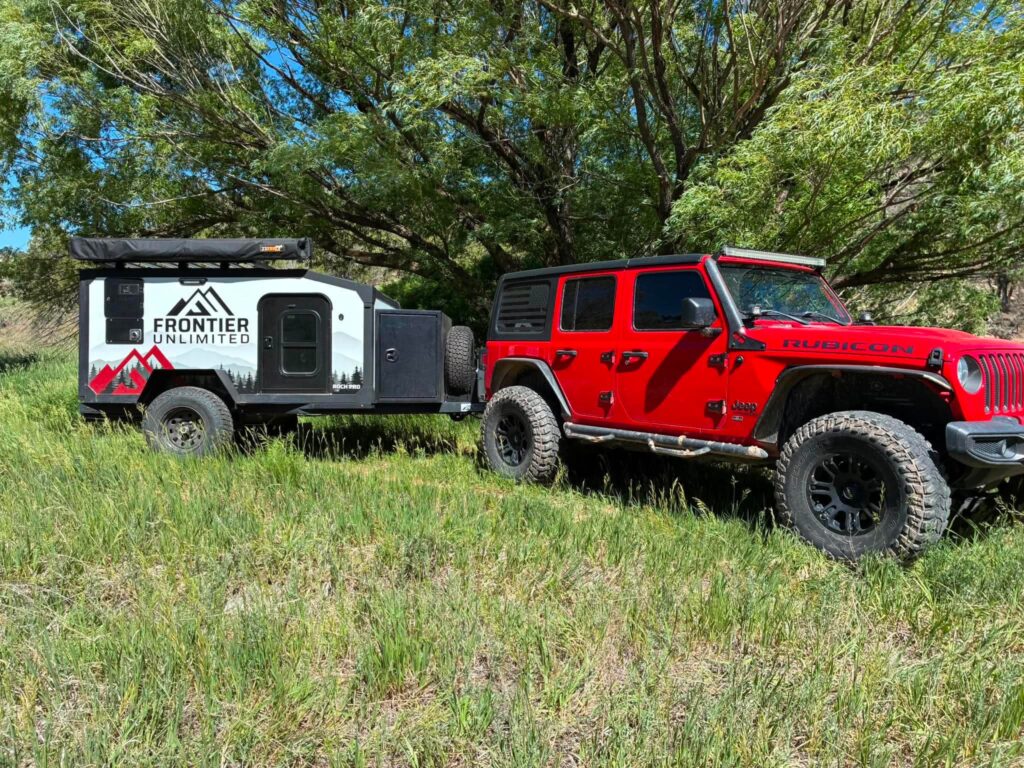
Standard rule: tongue weight runs 10–15% of your loaded trailer weight.
The Frontier Unlimited ROCH Chassis has an 880 lb dry weight and a 3,500 lb GVWR. Load it to 1,500 lbs — gear, water, food, kit — and your tongue weight lands around 150–225 lbs. Add your hitch, any gear in the bed, and a passenger, and you’re still well inside the payload window of any half-ton or mid-size truck on that list.
That payload capacity: 2,620 lbs on the ROCH Pro is what makes this work. A trailer with a 3,500 lb GVWR and only 900 lbs of cargo capacity means you hit the wall fast. You have room to actually pack.
A Note on Weight Distribution Hitches: A WDH is great for leveling your rig and improving handling, but it does not increase your payload capacity. It moves weight to the front axle, it doesn’t raise your limit. Keep your focus on that door jamb sticker.
Beyond the Brochure: The Legit Numbers
Dry weight is what a trailer weighs empty. GVWR is the max it can weigh loaded. The gap between them is what you can put in it. Ask for both numbers and do the math yourself. If you can’t get a straight answer, keep pressing.
Dry weight is a marketing number. GVWR is the number that runs your trip.
Before You Hitch Anything
Pull up your door jamb sticker. Ignore the brochure numbers and find the yellow and white “Tire and Loading Information” sticker inside your driver’s door. That is your actual payload capacity. Figure out the tongue weight on the trailer you’re looking at (10–15% of loaded trailer weight), add that to every person, pet, and piece of gear you’re putting in the truck, and make sure that total is less than what’s on that sticker. If it isn’t, the trailer doesn’t fit your truck. Doesn’t matter how good it looks.
If the math works, it works. If it doesn’t, a bigger trailer won’t fix it — a different truck will.
The ROCH Pro was built to work with the trucks most people already own. Half-ton. Mid-size. You don’t need a dually to run it. You need to know your numbers.
Booth E130 — Overland Expo Mountain West — August 21–23, 2026
The Ranch — Loveland, Colorado
FAQ’s … TLDR
Q: What’s the difference between tow rating and payload capacity?
Your tow rating is the max weight your truck can pull. Your payload capacity is the max weight your truck can carry — in the bed, in the cab, and on the hitch combined. Most people know their tow rating. Almost nobody knows their payload. Payload is the number that actually matters.
Q: Does tongue weight count against payload or tow rating?
Payload. Every pound your trailer pushes down on your hitch comes out of your truck’s payload budget — not your tow rating. A truck with 1,500 lbs of payload and 225 lbs of tongue weight only has 1,275 lbs left for passengers, gear, and anything in the bed.
Q: How do I calculate tongue weight?
Tongue weight is typically 10–15% of your trailer’s loaded weight. Load your trailer to 1,500 lbs and you’re looking at 150–225 lbs on the hitch. Find your payload limit on the yellow sticker inside your driver’s door jamb — not the brochure.
Q: What is the payload capacity of a Ford F-150?
1,500–2,200 lbs depending on trim and configuration. Check your specific truck’s door jamb sticker. The window sticker and brochure numbers are maximums — your actual truck may be lower based on how it was built.
Q: Can a Toyota Tacoma tow an off-road camper?
It can tow one. Whether it has enough payload is a different question. Tacoma payload runs 1,120–1,440 lbs. Account for tongue weight, passengers, and gear before you hitch anything. It’s tight on a loaded Tacoma.
Q: Can a Jeep Gladiator tow an off-road camper?
Yes. The Gladiator carries 1,200–1,650 lbs of payload depending on build. The ROCH’s tongue weight loaded sits around 150–225 lbs, which leaves plenty of room — but do the math on your specific rig.
Q: Can a 4Runner tow an off-road camper?
The 4Runner has roughly 1,500 lbs of payload. It can handle the ROCH’s tongue weight with margin for two people and gear. It’s one of the more capable SUV options for this application.
Q: What is the dry weight of the ROCH camper?
880 lbs dry. GVWR is 3,500 lbs. Loaded to 1,500 lbs is a realistic real-world number for most people — that puts tongue weight at 150–225 lbs.
Q: What’s the difference between GVWR and dry weight on a trailer?
Dry weight is what the trailer weighs empty from the factory. GVWR is the maximum the trailer is rated to weigh when fully loaded — trailer plus everything inside it. The gap between those two numbers is your cargo capacity.
Q: Where do I find my truck’s actual payload capacity?
The yellow or white Tire and Loading Information sticker on your driver’s door jamb. That number is specific to your truck. Brochure numbers are the best-case maximum for that model — your actual truck may be different.
Leave a Reply