

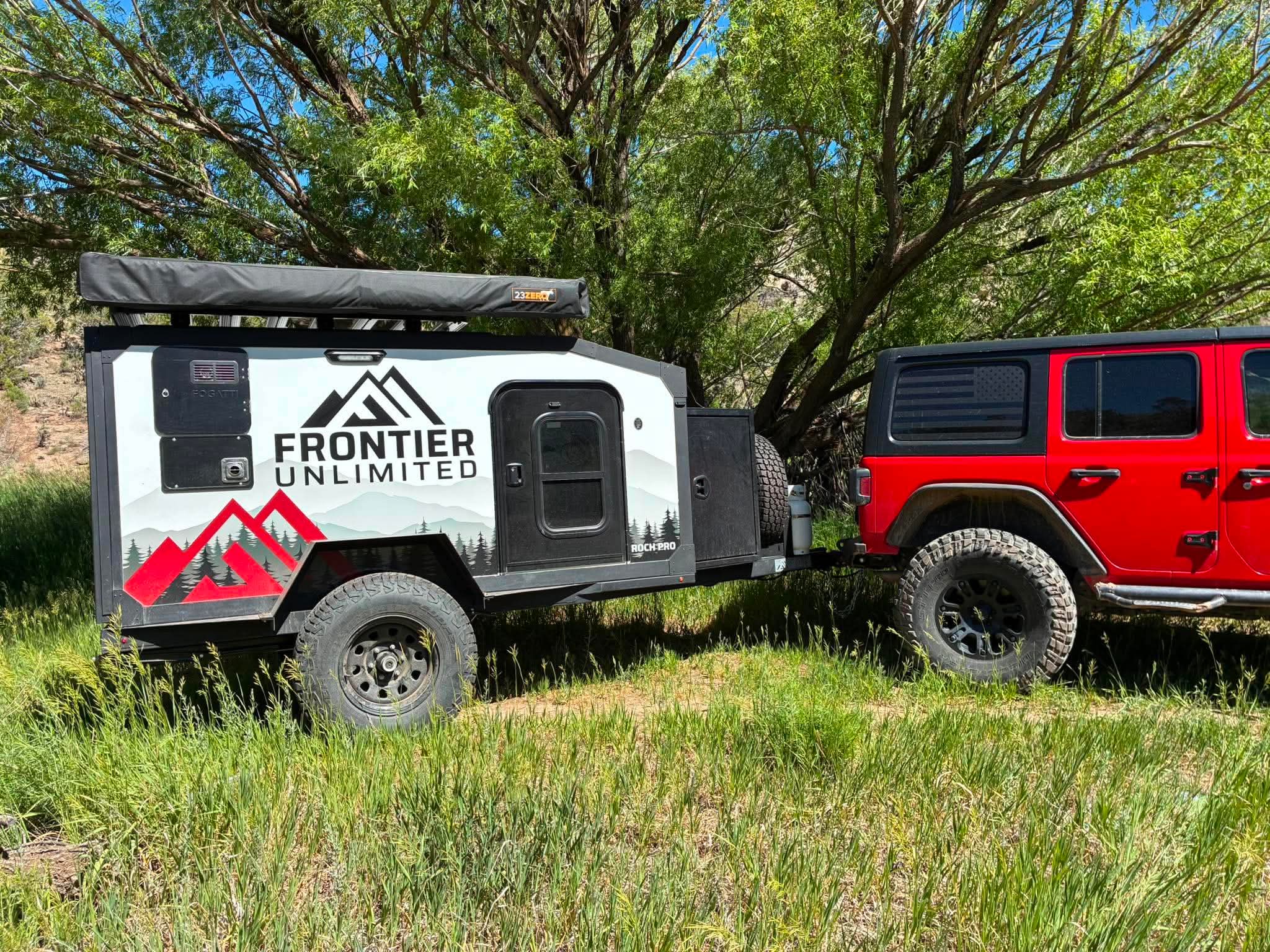
The typical off-road trailer failure scenario: You’re two hours past the last cell tower. The trail is rough, the sun is dropping, and your trailer just gave out. Seized bearing. Cracked weld. Blown spring. It’s not a question of if it happens with cheap construction, it’s when.
Traditional RV-style trailers aren’t built for this. Neither are most trailers marketed as “off-road ready.” We know this, it’s why we built our own and how we got into the off-road camper business in the first place. Most corporate companies throw on oversized terrain tires and a matte black fender flare, to make it look tough, but then they leave the highway-grade frame underneath.
Here is what actually kills trailers on the trail, and why the Frontier Unlimited ROCH Pro is engineered from the ground up to survive it.
Table of Contents
Problem #1: Washboard Dirt Roads Act Like a Jackhammer
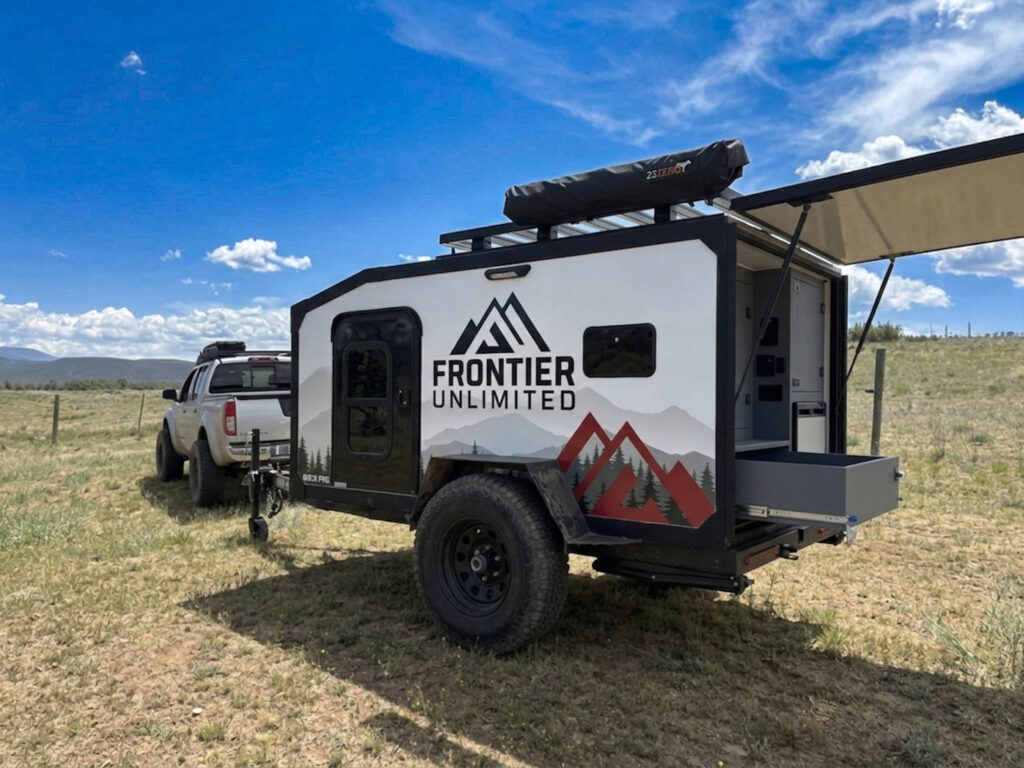
Washboard dirt roads generate continuous, high-frequency vibration. It’s relentless. Over miles of corrugation, that vibration creates a harmonic resonance that acts like a literal jackhammer on every component in your rig.
On a standard chassis, this vibration causes catastrophic failure points:
- Standard threaded bolts back themselves out of unlocked hardware.
- Cheap, non-penetrating welds crack at critical frame stress points under cyclical fatigue.
- Light-gauge stamped steel frames twist, fatigue, and eventually shear.
The Engineering Fix:
The ROCH Pro uses a fully welded, high-strength steel off road camper chassis designed to absorb trail punishment rather than transmit it to your components. Every single fastener uses mechanical locking: nylon-insert lock nuts and Nord-Lock washers throughout. Nothing backs out under vibration. Nothing shears at mile 200.
Problem #2: Poor Weight Distribution Buries Your Tow Vehicle
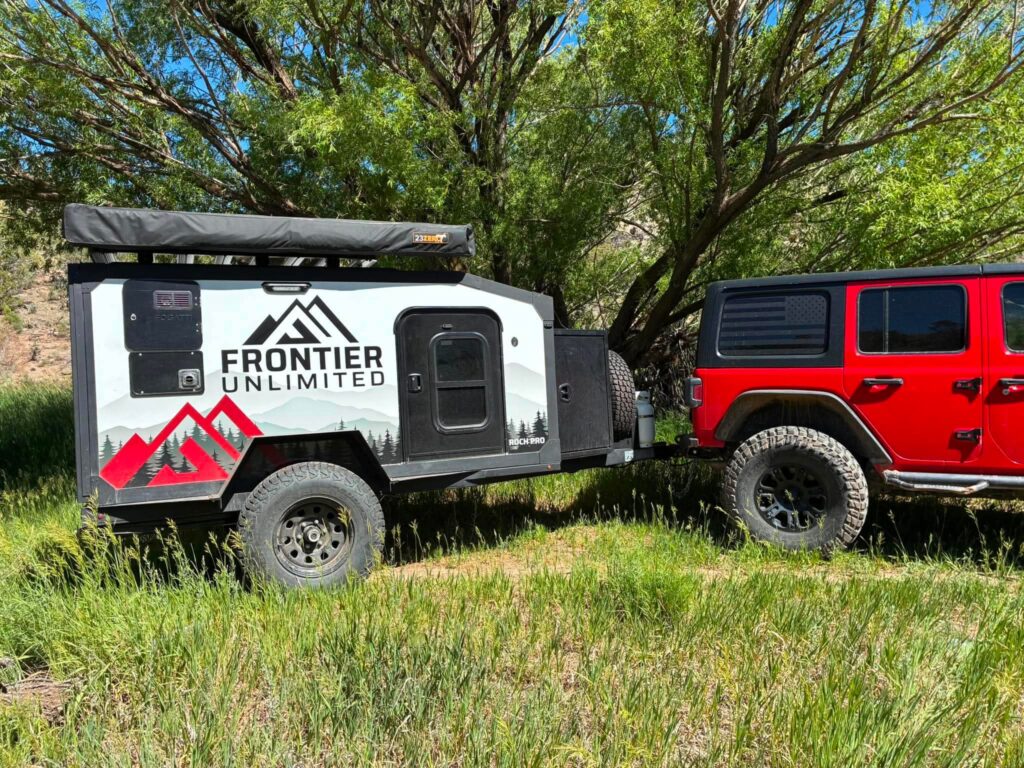
A poorly designed trailer doesn’t just struggle on its own, it actively works against your tow vehicle. High tongue weight or a bad center of gravity shifts the vehicle’s load distribution, pushing your rear tires deep into loose terrain.
Sand, mud, and soft silt swallow your rear axle while your trailer sits behind you like dead weight. Moderate 4×4 trails turn into stressful recovery missions. Time gets burned, gear gets stressed, and the trail wins.
The Engineering Fix:
True trail capability requires balanced weight distribution. The ROCH Pro is engineered with a low center of gravity and optimized tongue weight. It tracks perfectly inside the footprint of your tow vehicle, meaning if your truck clears an obstacle, your trailer does too, without dragging your rear axle into the dirt.
Problem #3: Seized Bearings and Failed Leaf Springs
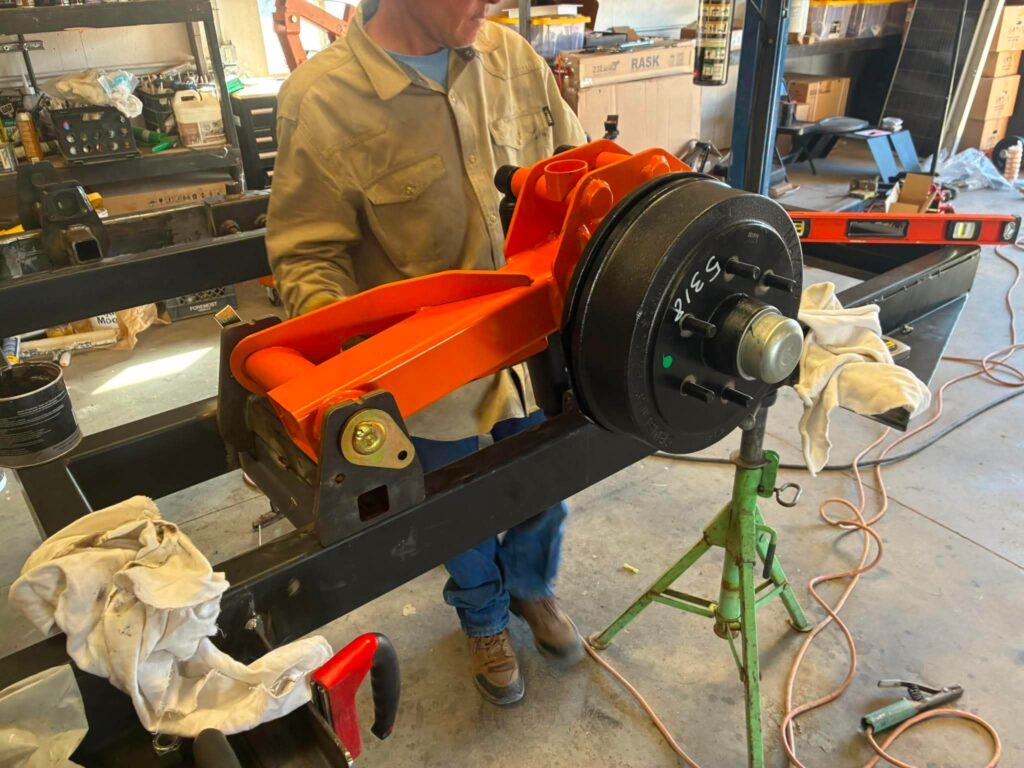
Traditional leaf springs were designed for predictable pavement. Put them on an undulating, rocky trail and they flatten, fatigue, and lose their spring rate under load. Straight axles get hung up on boulders, and your ground clearance completely disappears.
Cheap bearing seals are even worse. Dirt, silt, and water bypass them during water crossings or dusty trail runs. The grease dries out, the bearings overheat, and they seize violently miles away from a parts store.
The Engineering Fix:
   [Standard Straight Axle] ──> Hangs on Boulders ──> Lost Ground Clearance
   [ROCH Pro Independent]   ──> Moves Autonomously ──> Constant Trail Clearance
The ROCH Pro replaces outdated tech with a true independent, axle-less suspension system by Cruisemaster, no straight axle, no shared failure point. Each wheel articulates independently on coil springs, meaning when the left side climbs a boulder the right side stays planted and your ground clearance doesn’t disappear. The CRS2 is rated to 3.5 tons ATM and built with sealed hub assemblies designed for water crossings, silt, and sustained trail abuse — not highway-spec seals that dry out and fail 50 miles from nowhere. Leaf springs flatten. Axles hang up. The CRS2 doesn’t.
Problem #4: The Interior That Destroys Itself on the Trail
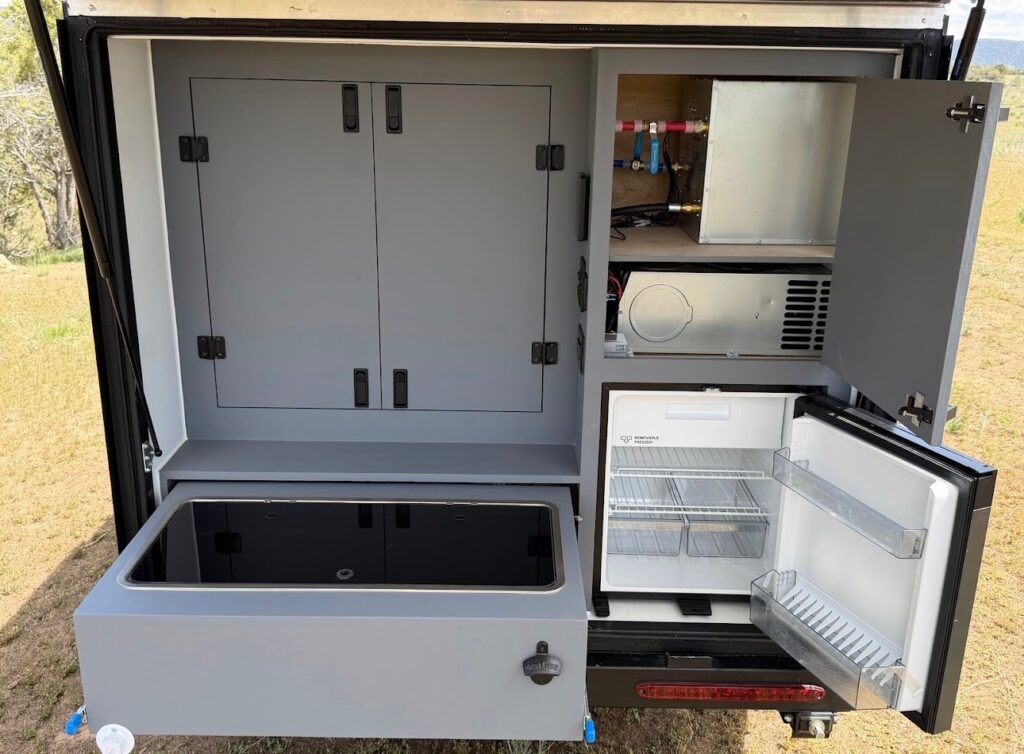
Walk around any overland expo and you’ll see trailers that look like military tanks on the outside. But step inside, and it’s a different story. Mainstream manufacturers build a rugged exterior shell, wrap it in aluminum, and then use cheap, highway-grade RV cabinetry on the inside.
After 50 miles of trail vibration, that shortcut catches up to you. Owners frequently report opening their camper doors at camp only to find:
- Microwave mounts sheared completely off the wall.
- Cabinet doors ripped off their hinges because tiny screws were driven straight into fragile particle board.
- Plastic latches snapped, leaving gear scattered and broken across the floor.
There is nothing worse than spending your first hour at a beautiful campsite using a cordless drill and wood screws just to rebuild your interior cabinets so you can make dinner.
The Engineering Fix:
An off-road interior cannot be an afterthought. The ROCH Pro features an interior built with the same structural integrity as its chassis. The ROCH Pro uses high-precision CNC-cut cabinetry with lock-and-tab joinery. The tolerances are engineered to allow for natural material movement and expansion, so the joints don’t fight the trail, they work with it. Every piece is secured with high-quality rivets and screws, not plastic clips or staples. After 50 miles of washboard, your kitchen is exactly where you left it.
Problem #5: Plumbing That Fails Exactly When You Need It
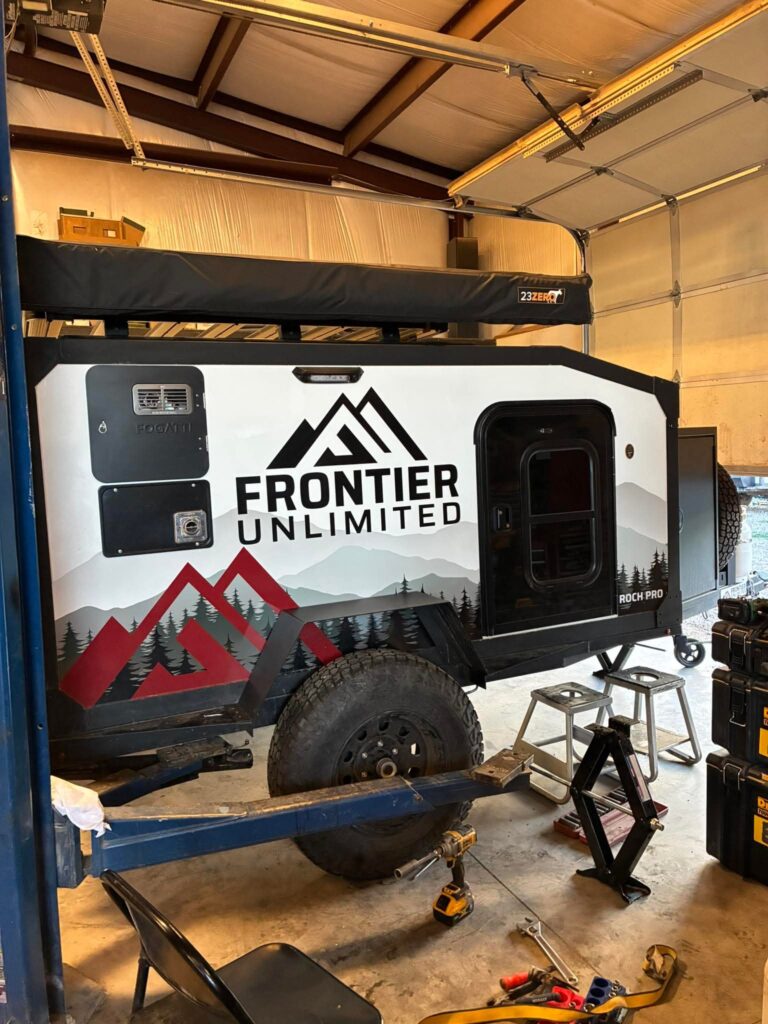
Traditional RV plumbing relies on rigid plastic lines and cheap plastic push-fittings. On a bumpy, undulating trail, this setup is a ticking time bomb.
Continuous chassis flex and trail jarring cause those rigid water lines to rub against sharp metal frame edges or twist until a fitting cracks. The worst part? You won’t notice it while you’re driving. You’ll only find out after you set up camp and realize your water pump just emptied 20 gallons of fresh water straight into your underbelly insulation—leaving you stranded without water miles from civilization.
Worse yet, many “off-road badged” trailers leave their propane lines and gray-water drain valves hanging completely exposed underneath the rig. One bad break-over angle on a rock or a stray log, and the trail tears your plumbing completely off the bottom of the trailer.
The Engineering Fix:
Water and fuel systems must be protected. Water and fuel systems must be armored and protected for heavy trail use. The ROCH Pro replaces flexible gas lines with black iron pipe to take every impact without getting smashed or cracking and all water lines are done with PEX-A going straight from the tank into the cabin, making sure that it will never get snagged or smashed, Furthermore, we don’t leave your lines dangling. All plumbing and gas lines are rigidly supported every 2 feet to keep them up and protected, keeping them completely shielded from rock strikes, debris, and ground clearance traps.
The Bottom Line
The backcountry doesn’t care about social media or a pretty brochure, it doesn’t care that some corporation spent more on marketing than on research. It cares about whether your welds hold, your bearings spin, and your suspension travels when the trail goes sideways.
If you are tired of checking your rearview mirror every five minutes to see what broke on the trail, it’s time to look at a rig built for the reality of the backcountry.
Leave a Reply