

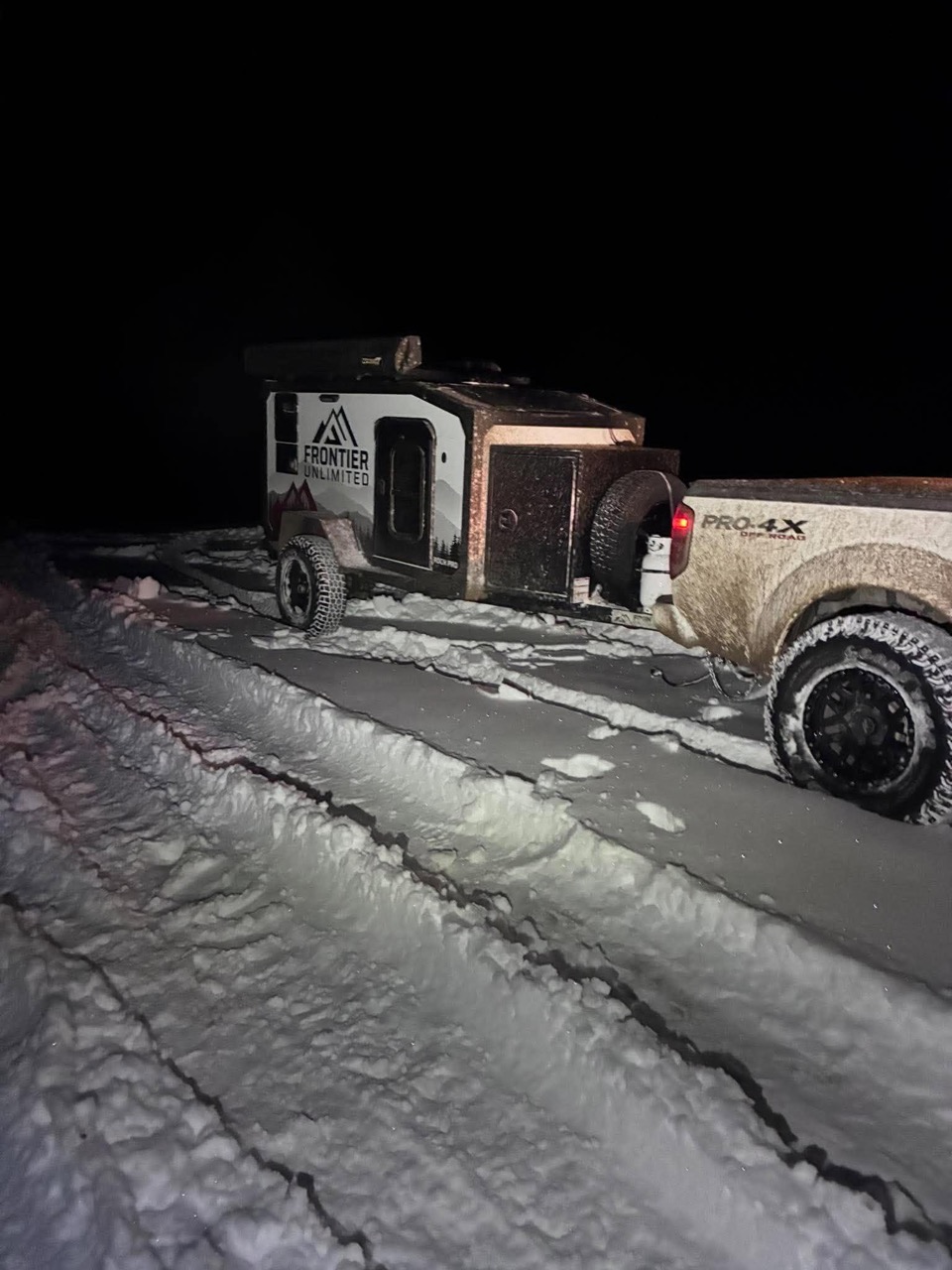
Yes, you must winterize an off-road trailer, unfortunately. For most of overloading community, the season is over. Snow is here, or will be shortly. Your trailer did its seasonal job, and now it gets to sit idle for a few months. How you winterize it decides whether spring starts with a fun trip or a dreaded repair bill.
Water expands about 9 percent when it freezes. 100 mL of water will turn into roughly 109 mL of ice. This powerful expansion is enough to split a fitting, crack a pump housing, or ruin a water heater. In fact, already, two of our residential sprinkler heads are toast, as we finally got around to bleeding our irrigation system yesterday. So, time is of the essence.
Ice, trapped moisture, cold and hungry mice, and a season of dirt packed into the suspension are all issues that should be dealt with before they become a problem. None of it takes long to prevent. This is the checklist we run on our own trailers before (if) they go into storage.
The Quick Version
- Drain the fresh water tank and run the pump dry
- Drain the water heater
- Blow out every line with compressed air
- Store the batteries at the right charge and shut off the main disconnect
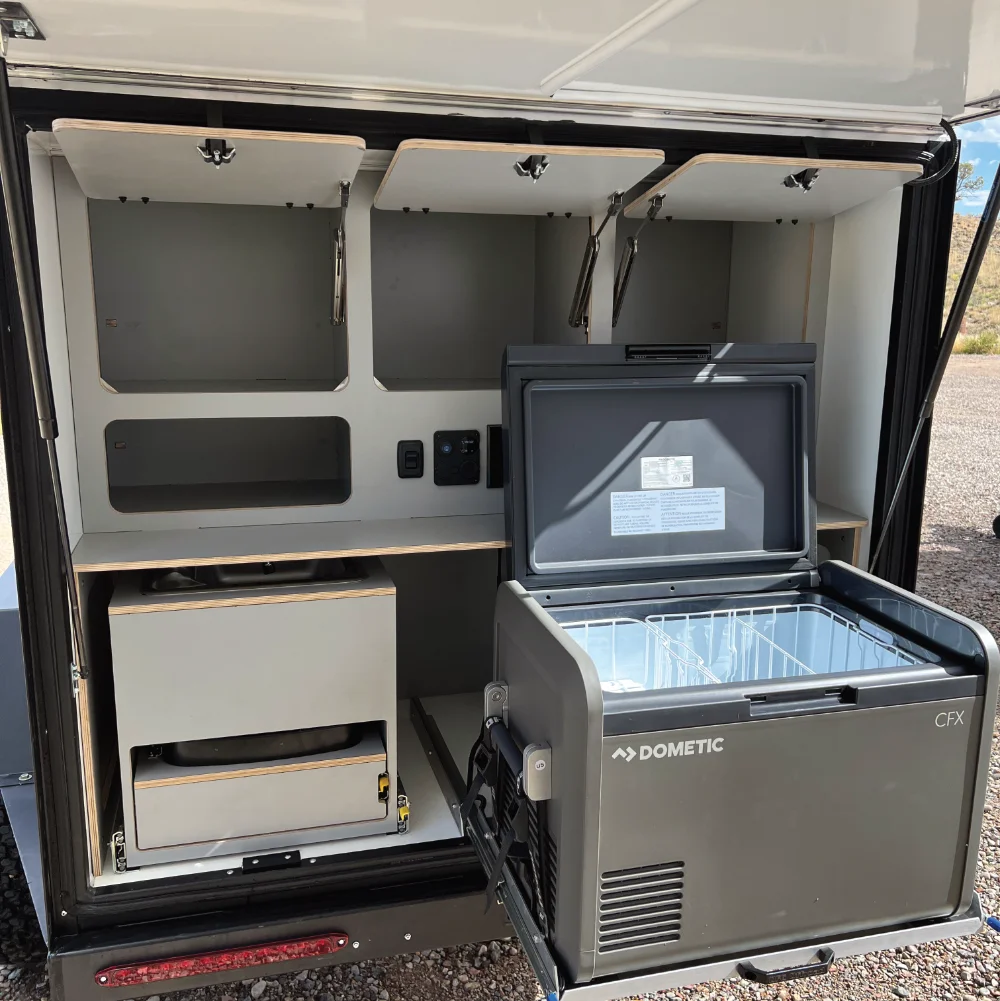
- Empty the galley, fridge, and cabinets
- Inspect and condition every door, hatch, and vent seal
- Inspect the frame, suspension, bearings, brakes, and hitch
- Shut off and disconnect the propane
- Set the tires, jacks, and cover for storage
Drain the Fresh Water
Pitch the trailer back, open the tank drain, and let it empty completely. Next, open the shower and faucets, then bump the water pump on for a few seconds to purge the lines. Shut the pump off the second it runs dry—running an RV pump dry will burn out the motor.
Skip sanitizing the tank now. Do that in spring before the first trip, when you will actually be drinking from it.
Run RV Antifreeze
Add antifreeze: Pour 2 to 3 gallons of non-toxic RV antifreeze into the empty fresh tank.
Pump it through: Close all the fixtures. Turn on the pump and open one fixture at a time until pink comes out steadily. Do the hot side on every fixture: pink coming out of a hot tap means the antifreeze made it through the heater and the mixing tank. That includes the outdoor shower.
Protect the drain: Pour a cup down the sink drain.
Never use automotive antifreeze. It’s toxic, it has no place in a drinking water system, and it can void the heater’s warranty.
In spring: Flush the system with fresh water until it runs clear, then sanitize the tank before the first trip.
Drain the Water Heater
This is the part that costs the most when it freezes. The ROCH Pro runs a Fogatti InstaShower 8 Pro, a tankless heater with a built-in mixing tank. Tankless units hold their water in thin heat exchanger tubes, and very little water in a tight passage is exactly what splits when it freezes.
Don’t count on freeze protection: The InstaShower has a freeze protection mode, but it only works while the heater has power and propane. Parked in storage with the battery disconnect off, it does nothing.
Shut it down: Turn off the heater, shut off the propane, and close the water supply.
Drain it: Open the heater’s drain and let the heat exchanger and mixing tank empty completely. Fogatti’s manual for the 8 Pro shows where the drain is.
Leave it in the loop: This heater does not get bypassed. Once it’s drained, close the drain back up. The antifreeze in the next step needs to run through the heater and the mixing tank too.
Store the Lithium Batteries Right
The ROCH runs GoPower lithium (LiFePO4), and lithium stores well if you follow three rules.
Don’t store it full or dead: Most manufacturers recommend a partial state of charge for long storage. Check your battery’s spec sheet for the exact number.
Watch the cold charging: Lithium can’t safely charge below 32°F unless the battery has built-in low-temperature protection or heating. If solar stays connected while the trailer sits in the cold, know your battery’s low-temperature charge cutoff.
Kill the parasitic draw: Shut off the main battery disconnect. Detectors, displays, and inverter standby draw will quietly drain a battery over a winter. Check the charge once a month.
Empty the Galley, Fridge, and Cabinets
Pull every food item, every can, and every bottle of anything. Canned goods and liquids freeze and burst. Food left behind invites mice, and mice chew wiring.
Air out the fridge: Clean and dry it, then prop the door open so it does not grow mold.
Deal with soft goods: Pull bedding and soft goods if the trailer is stored outside, or at least add a moisture absorber.
Seal out mice: Plug any gaps where lines and wiring pass through the floor or shell. Steel wool works. Mice need a gap about the width of a pencil.
Check Every Door, Hatch, and Vent Seal
A season of washboard and dust works every seal on the trailer. Walk around each door, the galley hatch, the roof vent, and any window.
Check the gaskets: Look for gaskets that are cracked, torn, or flattened.
Read the dust: Look inside for dust lines along seams and corners. Wherever dust got in, water will too.
Condition the rubber: Clean the seals and treat them with a seal conditioner so they stay soft through the cold.
Check the roof: Inspect the sealant around every roof penetration: solar mounts, rack mounts, and the vent. Close the vent fully.
Snow sits on a roof and melts slowly. It will find any gap you leave it.
Inspect the Frame, Suspension, and Hitch
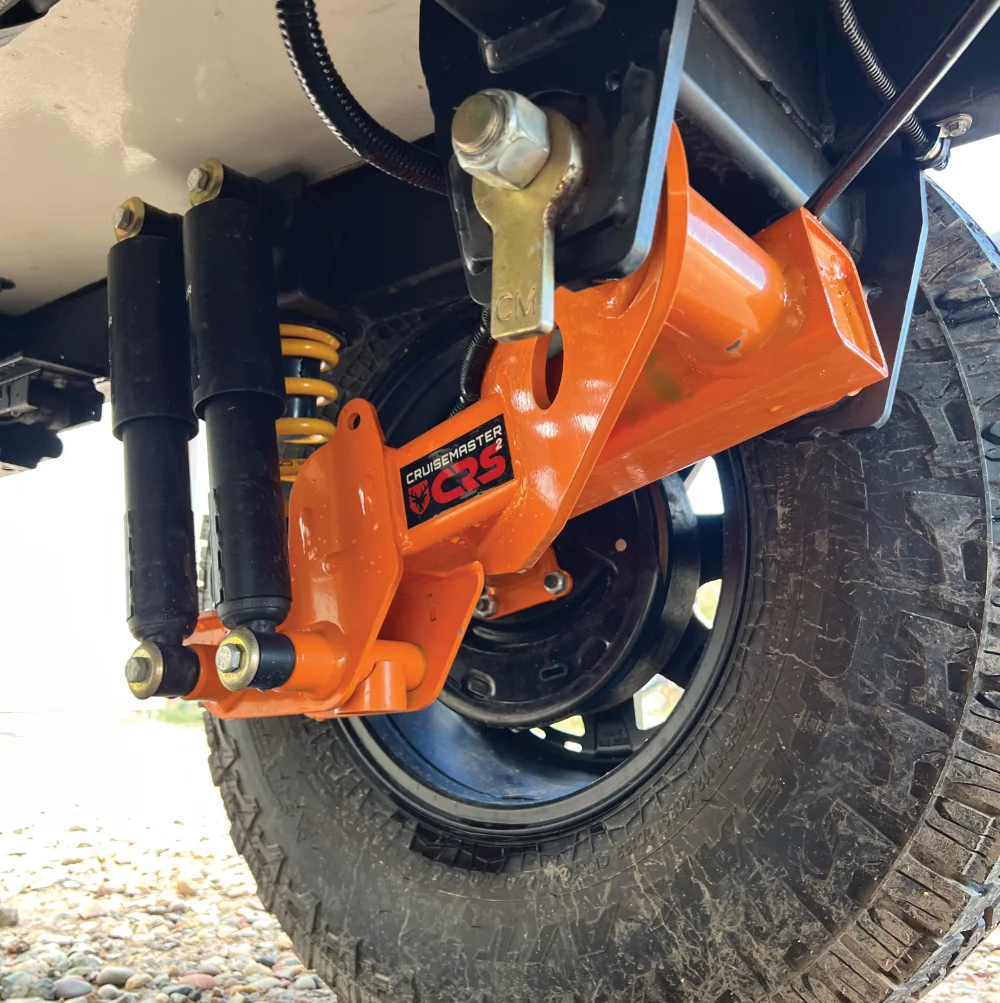
Inspect the Frame, Suspension, and Hitch
This is the step people skip, and it is the one that matters most on an off-road trailer. The rig took a beating all season. Get underneath it with a good light while you have time to fix what you find. Parts and shop time get scarce in spring.
Frame: Inspect the welds at the suspension mounts, the tongue, and the crossmembers for cracks. Touch up any chipped powder coat before winter moisture gets to bare steel.
Suspension: The ROCH runs Cruisemaster CRS2 independent suspension. Check the shocks for leaks, the bushings for wear, and the coil springs for cracks. Check mounting bolt torque against Cruisemaster’s spec. Washboard loosens hardware.
Wheel bearings: Spin each wheel and feel for roughness. Grab the tire at the top and bottom and rock it. Any play means the bearings need attention. Service them on schedule.
Brakes: Inspect the electric brake magnets and shoes, and check the brake wiring for chafing.
Hitch and wiring: Inspect the coupler for wear and service it per the manufacturer. Check the safety chains and breakaway cable. Clean the 7-pin plug and give it a coat of dielectric grease. Trace the wiring underneath for anything rubbed through.
Shut Off the Propane
Close the valve on the tank, disconnect it, and cap the fittings. Store cylinders outdoors in a ventilated spot, never inside a garage or living space.
Set It Up for Storage
Tires: Inflate them to the pressure on the sidewall. Cold air drops pressure about 1 psi for every 10°F.
Ground contact: Park on boards or pavers instead of bare dirt, and cover the tires to block UV.
Stability: Chock the wheels and set the stabilizer jacks.
Cover: Use a breathable cover or nothing. Plastic tarps trap moisture and chafe the finish every time the wind blows.
Snow: Brush heavy snow off the roof after big storms.
Indoors wins: Store it inside if you have the option.
Spring Starts Now
Everything you skip in November shows up in April as a cracked fitting, a dead battery, or a seized bearing. Do it once, do it right, and the rig is ready when the roads open.
Tired of buying “adventure” gear that can’t survive an actual adventure? If your current trailer came out of this season with leaks, loose cabinets, and a list of broken parts, more maintenance will not fix how it was built. The ROCH is built in Silt, Colorado, on a CNC-cut steel frame with Cruisemaster independent suspension and a composite body with no wood to rot. Spring build slots are limited. Call or text 970-404-2333 to check lead times.
Winterizing FAQ
Do I need RV antifreeze to winterize an off-road trailer?
Without a blowout fitting, yes. Draining leaves water in low spots, faucet bodies, and shower valves. Pump 2 to 3 gallons of non-toxic RV antifreeze through every fixture, hot and cold, until it runs pink. Never use automotive antifreeze.
How should I store lithium trailer batteries over the winter?
Store them partially charged, at the level your battery manufacturer recommends, and shut off the main battery disconnect so standby loads don’t drain them. Lithium can’t safely charge below 32°F unless the battery has built-in low-temperature protection or heating, so know your battery’s cutoff. Check the charge once a month.
How do you winterize a Fogatti tankless water heater?
Turn off the heater, the propane, and the water supply, then drain the heat exchanger and mixing tank completely. Fogatti units don’t need a bypass, so close the drain and pump RV antifreeze through the system until it runs pink from every hot tap. The built-in freeze protection only works with power and propane connected, so don’t rely on it for storage.
When should I winterize my off-road trailer?
Before the first hard overnight freeze, not the first snow. One night well below freezing is enough to split a fitting or crack a water heater.
What should I inspect on the suspension and frame before storage?
Check the welds at the suspension mounts, tongue, and crossmembers for cracks. Inspect shocks for leaks, bushings for wear, and coil springs for cracks, and check mounting bolt torque. Spin each wheel to check the bearings, inspect the brake magnets and wiring, and touch up chipped powder coat before winter moisture reaches bare steel.
Leave a Reply