

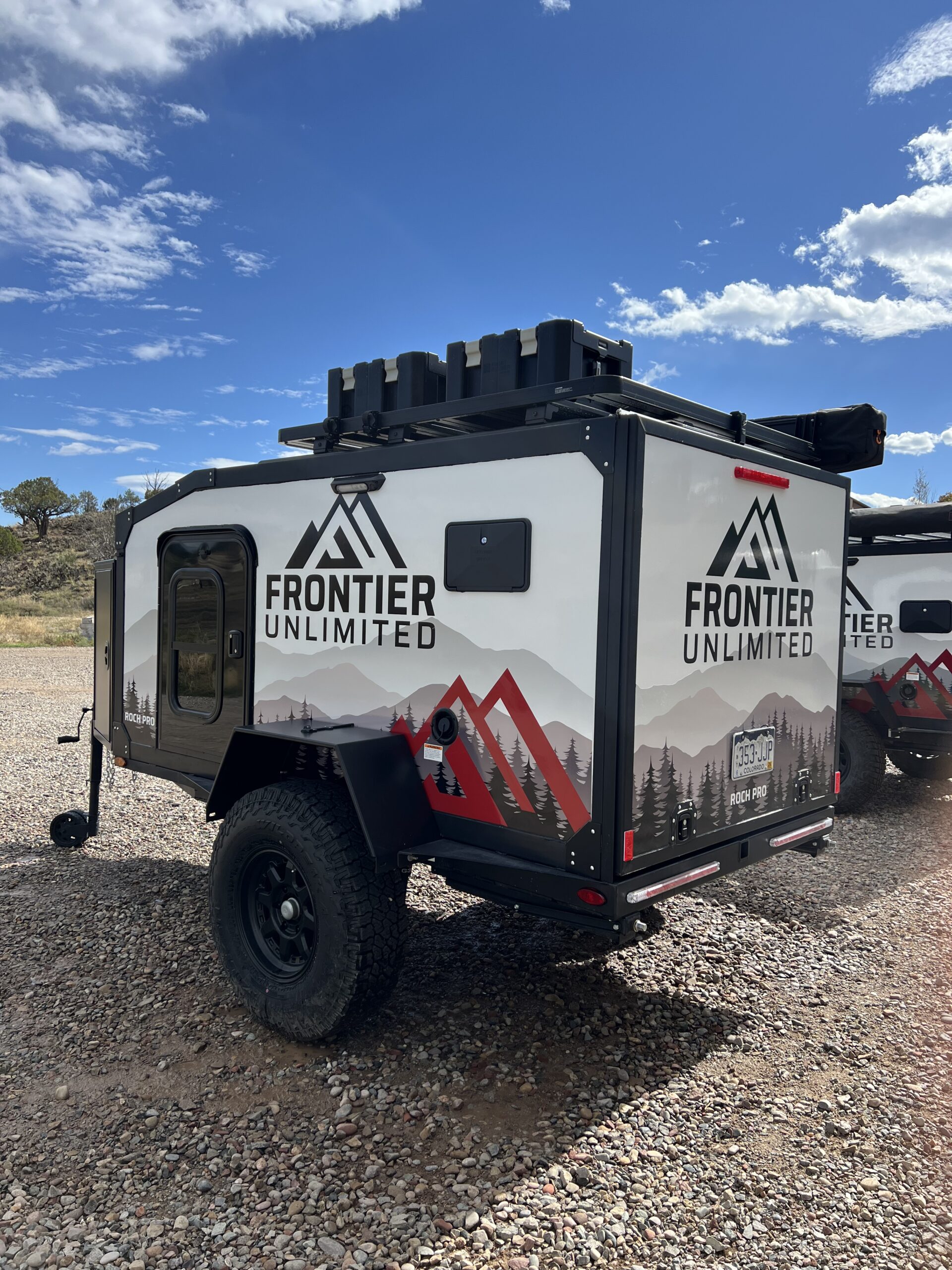
Choosing the right backcountry hunting camper is one of the most consequential gear decisions you’ll make, mostly because it’s the most expensive, and most hunters get it wrong. They spend real money on glass, rifles, camo and boots, then drag a box-store camper or a 10-year-old rig into country that demands better. The result is always the same: stuck, broken down, or freezing at 4 a.m., 1.5 hours from the nearest paved road.
Choosing the Right Backcountry Hunting Camper: What Actually Matters
The right backcountry hunting trailer becomes a force multiplier. It gets you deeper, keeps you out longer, and never adds to your list of problems. The wrong one is the reason you cut trips short and come back empty handed.
We built the Frontier Unlimited ROCH Pro specifically to solve every one of these problems. We’re not a corporate outfit that outsources to China. We’re a family of hunters, dirt bikers, whitewater kayakers, and backcountry obsessives who broke every piece of gear the market had to offer before building what we actually needed. A lifetime of experiences led to four full years of R&D, real-terrain testing, and hard miles. This is what we offer.
The Chassis Is Everything — Don’t Overlook This
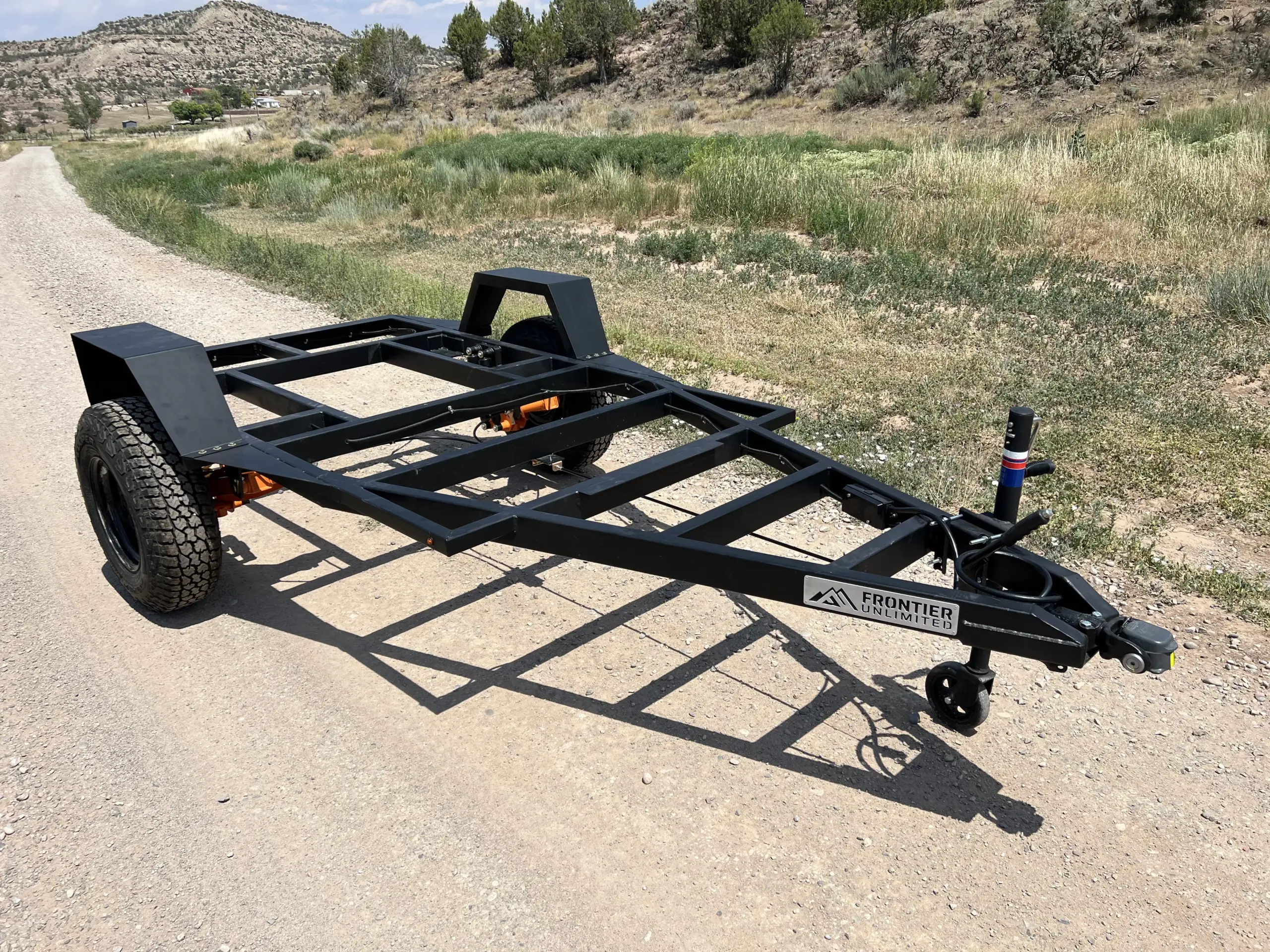
Every single component on your trailer sits on top of the frame. The suspension, the shell, the sleeping quarters, the power system; all of it lives and dies by the quality of the chassis underneath. This is a non-negotiable, and it’s the first place cheap manufacturers cut corners.
What to Look For: Steel Frame Construction
Aluminum is light. But in the backcountry, aluminum frames flex, crack at welds, and don’t tolerate the sustained abuse of real off-road terrain. Heavy-wall tube steel is what you want, and specifically, CNC-cut tube steel so the geometry is precise and the welds are in the right place.
The ROCH chassis is built from 4″ x 2″ x 1/8″ CNC-cut tube steel, powder-coated for corrosion resistance. This is the same industrial-grade construction used across our entire ROCH lineup. The powder coat isn’t cosmetic, it’s real protection against the water, mud, and rock salt that will try to eat your frame over years of hard use.
Ground Clearance: Don’t Compromise
This one is simple: if you can’t clear rocks and ruts, you’re not going anywhere. Consumer trailers offer 10-12 inches of ground clearance. That’s fine for dirt roads. It’s useless on the trails that hold elk, mule deer, or pronghorn in real backcountry territory.
The ROCH Pro runs 15 inches of ground clearance. The ROCH Chassis, for custom builds, gives you 21″. Those extra inches are the difference between driving through and getting hung up, between getting to camp and camping where you broke down. That’s exactly what we used to do before we said, ENOUGH!
Payload Capacity Matters More Than You Think
Backcountry hunters are heavy packers by necessity. Meat, gear, water, a week’s worth of food, optics, recovery equipment, it adds up fast. A trailer with a 600 lb payload is a liability waiting to happen. You’ll ride it overloaded, and overloaded cheap trailers bend frames and blow bearings.
The ROCH Pro is rated to 3,500 lbs GVWR with 1,350 lbs of payload capacity. The ROCH Chassis pushes that to 2,620 lbs of payload. Load it properly and it doesn’t flinch.
Suspension: Axle-Less Is the Only Real Answer for Off-Road
This is the most overlooked spec on any hunting trailer, and the one that will make you look prepared or not in front of everyone at basecamp.
Traditional axle setups transfer shock directly from the wheel to the frame. Hit a rock on one side, both wheels feel it. On rough two-tracks, washboard, or rocky mountain terrain, a solid axle is essentially a jackhammer running through your rig. Components loosen. Welds crack. Things break.
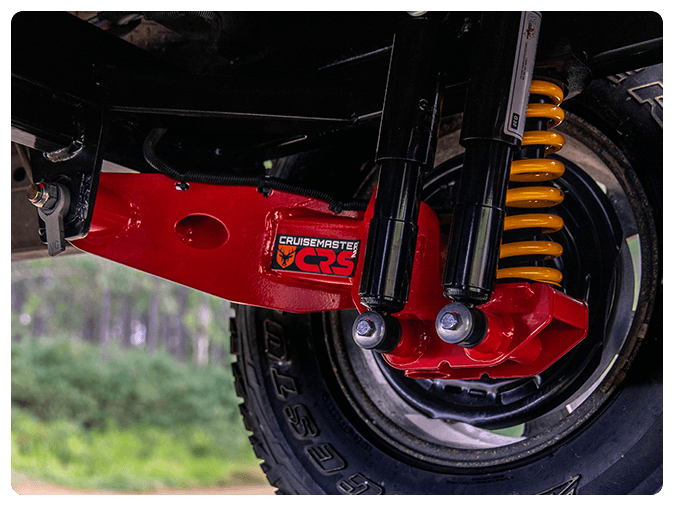
Axle-less independent suspension eliminates all of that. Each wheel articulates independently, absorbing impacts without transferring them to the opposite wheel or the frame. Your gear stays intact. Your shell stays watertight. Your welds stay whole.
The ROCH runs Cruisemaster CRS2 axle-less independent suspension, the most respected names in heavy-duty off-road suspension. The Cruisemaster CRS2 is engineered specifically for loaded off-road trailers, delivering independent wheel travel that isolates shock and keeps your rig tracking properly even on severely uneven ground. It’s not a cost-saving measure. It’s a performance choice.
Pair that with the Cruisemaster D035 hitch coupler with integrated parking brake, again, a name that matters in the overland world, and you have running gear that serious four-wheel-drive operators actually trust.
Shell Construction: Why Composite Beats Wood and Metal Every Time
Go look at any 5-year-old wooden-framed trailer that’s seen real use. Water got in somewhere. The wood is soft. The walls delaminated. The interior reeks. Wooden framing in a trailer isn’t a design feature it’s a failure waiting for a wet season.
Lightweight metal shells dent, corrode, and conduct cold directly into your living space. Every surface scratch is a rust start.
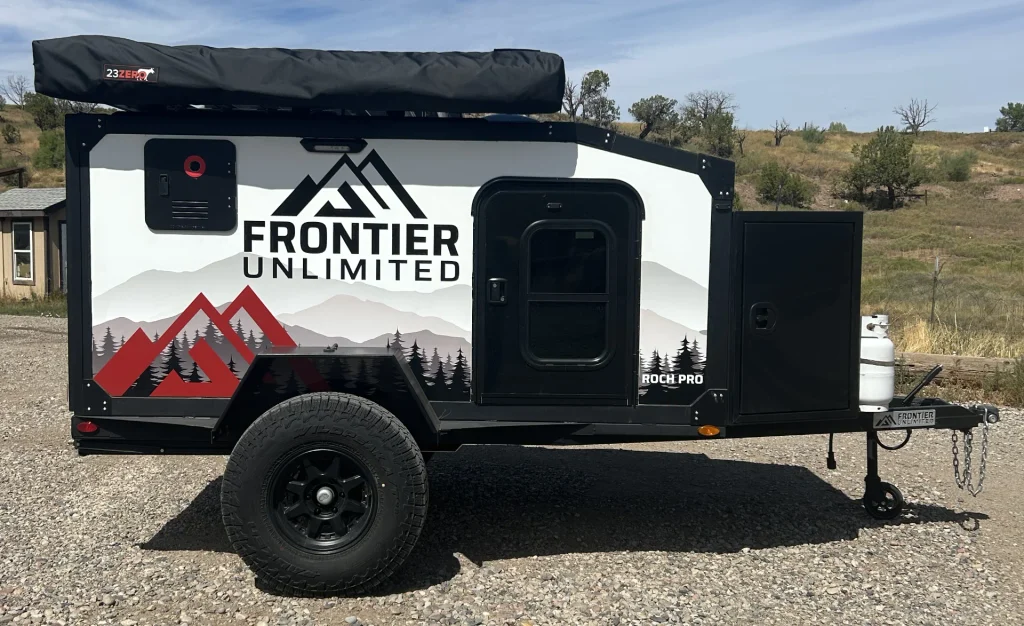
The ROCH Pro is built with an impact-resistant composite shell and a powder-coated CNC-cut aluminum exoskeleton. Composite doesn’t rot, doesn’t rust, doesn’t conduct cold the way metal does, and handles impact without failing the way wood does. The aluminum exoskeleton provides the structural rigidity without the weight or the corrosion risk.
The entire cabin is 2-inch fully insulated to an R-9 rating. That matters a lot when you’re hunting late October in the Rockies or November in the Missouri Breaks and the temperature drops into the teens overnight. An R-9 wall keeps the heat you generate inside and the weather outside.
Tires and Wheels: Size and Spec for Actual Off-Road Terrain
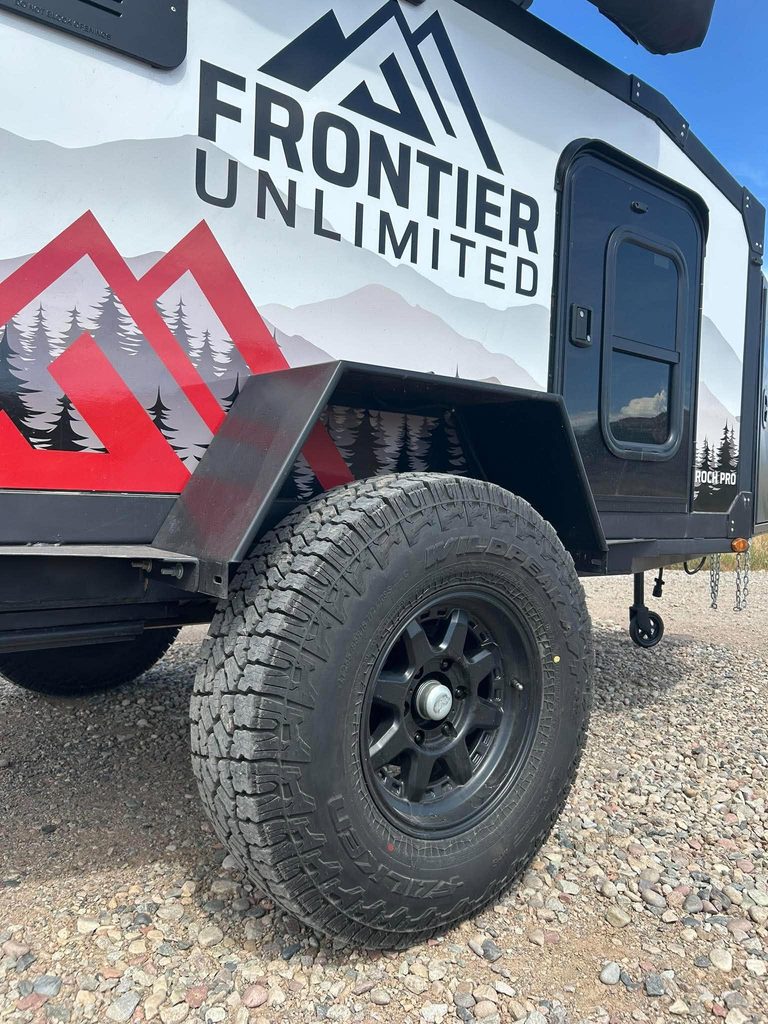
Trailer tires are a place where manufacturers love to cheap out. They’ll mount highway-spec street tires on a trailer marketed as an off-road unit and call it a day. Street tires on rocky mountain trails are a liability.
The ROCH runs 245/75R16 Falken Wildpeak A/T tires (30.5″ x 9.6″) on 16″ black steel wheels with a 6×5.5 bolt pattern. The Wildpeak A/T is a real all-terrain tire. It has the sidewall toughness and tread to handle the ground you’re actually hunting, not just the road to the trailhead. It also carries the Three-Peak Mountain Snowflake rating, which counts when late-season hunts put you in snow.
And it comes with a full-size matching spare. Not a compact spare. A full-size, mounted spare, same tire, same wheel, because when you blow a tire on an unmaintained two-track, you need to keep moving, not limp.
Power: Lithium, Solar, and Off-Grid Energy Independence
This is where a lot of hunting trailers completely fail you. You’re not car camping at a state park with a 30-amp hookup. You’re unknown miles off pavement for a week with no power grid, running refrigeration, lighting, heating controls, a furnace thermostat, and, at the very least charging devices for your phone. You need a real power system.
Lithium vs. Lead-Acid: This Isn’t a Gray Area
Lead-acid batteries are heavy, slow to charge, lose capacity in the cold, and you can only use about 50% of their rated capacity before you start damaging them. A “100Ah” lead-acid battery is effectively a 50Ah battery. In cold weather — where you’re hunting — that drops even further.
LiFePO4 lithium batteries discharge to 80-100% of capacity, hold that capacity in cold weather, charge significantly faster, and last 3-5x longer. For backcountry hunting, there’s no contest.
The ROCH Pro runs 2 x 100Ah GoPower LiFePO4 Bluetooth lithium batteries: 200Ah total. With the Power-trak 3″ digital display, you can see your state of charge, charge rate, and load in real time. You know exactly what you have. No guessing.
Double-Threat Charging Architecture
One source of charging is a single point of failure. The ROCH Pro uses three:
- 110W Obsidian solar panel with a portable expansion plug — adds solar to the mix and handles daytime topping off
- 30 AMP shore power — for the rare occasion you’re near a plug
1800W Pure Sine Inverter
A Go Power 1800W pure sine inverter means you can run actual AC loads; charging camera gear, running a CPAP if you need one, or anything else that wants clean 120V power. Modified sine inverters are cheaper and will fry sensitive electronics. Pure sine is what you want.
The ROCH Pro also has two 120V AC outlets and two 12V DC socket panels — you’re not running extension cords everywhere.
Heating: Four-Season Means Four-Season, Not “Three and a Half Season
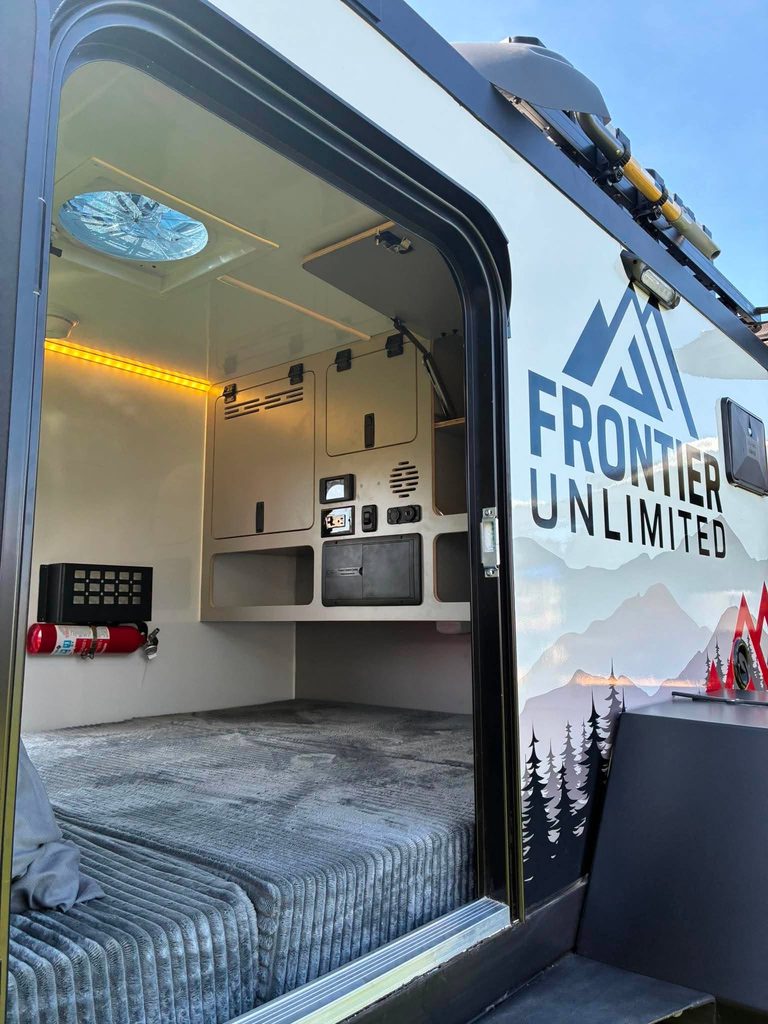
“Three-season” is marketing speak for “don’t use this in late October elk season or any pronghorn hunt that runs into November.” Most budget trailers are not genuinely cold-weather capable, and you’ll figure that out the hard way, when you are buying space heaters and wool blankets.
Genuine four-season capability requires two things: insulation that keeps the heat in and a heating system with the output to generate that heat.
The ROCH Pro runs a Dometic 12,000 BTU forced-air propane furnace. At 12,000 BTU, it heats the cabin fast and holds temperature efficiently. Pair that with the R-9 insulated walls and the composite shell, and you have a rig that’s genuinely livable when it’s cold outside — not just tolerable.
The roof vent is a Dometic Fan-Tastic with a rain sensor, critical for managing condensation inside the cabin during shoulder-season hunting when temperatures swing hard between day and night.
Refrigeration: Real Cold Storage for Real Hunters
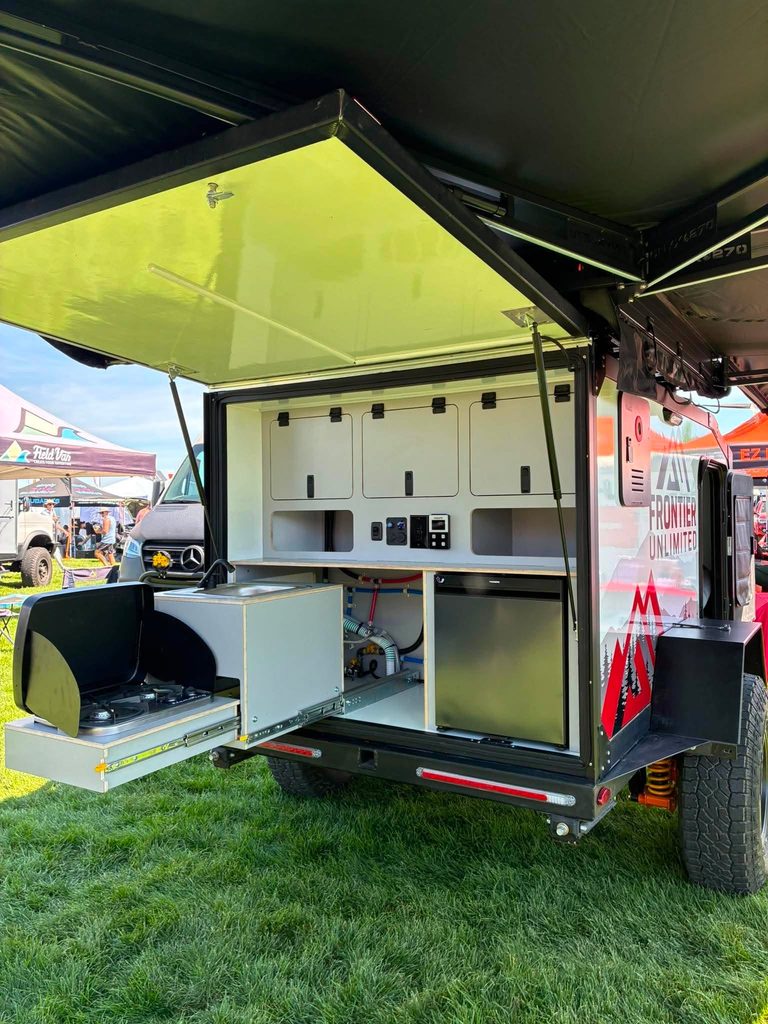
A cheap cooler is fine for a weekend trip. A 10-day backcountry hunting camp requires real refrigeration, and extra coolers, let’s be honest. Ice runs aren’t an option when you’re three hours from the nearest town.
The ROCH Pro carries EITHER a Dometic NRX 60C, a 55-liter compressor refrigerator with a freezer compartment OR, and this is an option only FU offers, the Dometic CFX5 Cooler, a 55-liter with ice maker. Dometic is the gold standard in mobile refrigeration. Both of these options run efficiently and hold temperature reliably, and have the capacity to store multiple days of food and drinks!
This is where a lithium power system pays for itself. A fridge or cooler running off lead-acid batteries will drain your bank in a day. Running off 200Ah of LiFePO4, boosted by solar and a 30 amp shore power plug? You run that fridge for a week without thinking about it.
Water System: Self-Sufficient or Dependent?
Remote hunting country doesn’t have tap water. You either carry what you need or you’re hoping for the best, but you know as well as we do, you always need more water than you think.
The ROCH Pro water system includes a 21-gallon CSA-approved potable fresh water tank with an on-demand self-priming pump. That’s enough water for cooking, drinking, and cleanup for multiple people over several days. The tank is protected by a massive 3/16-inch aluminum skid plate, because dragging an unprotected plastic tank over rocks is how you end up with a very expensive, very empty water supply.
Add a 66,000 BTU instant hot water heater and an exterior shower with a 23 Zero shower tent, and you’ve got hot water on demand! Great for cleaning your “utensils”, washing up after a muddy day, or running the sink in the rear galley.
The Galley: Because You’re Living Out There
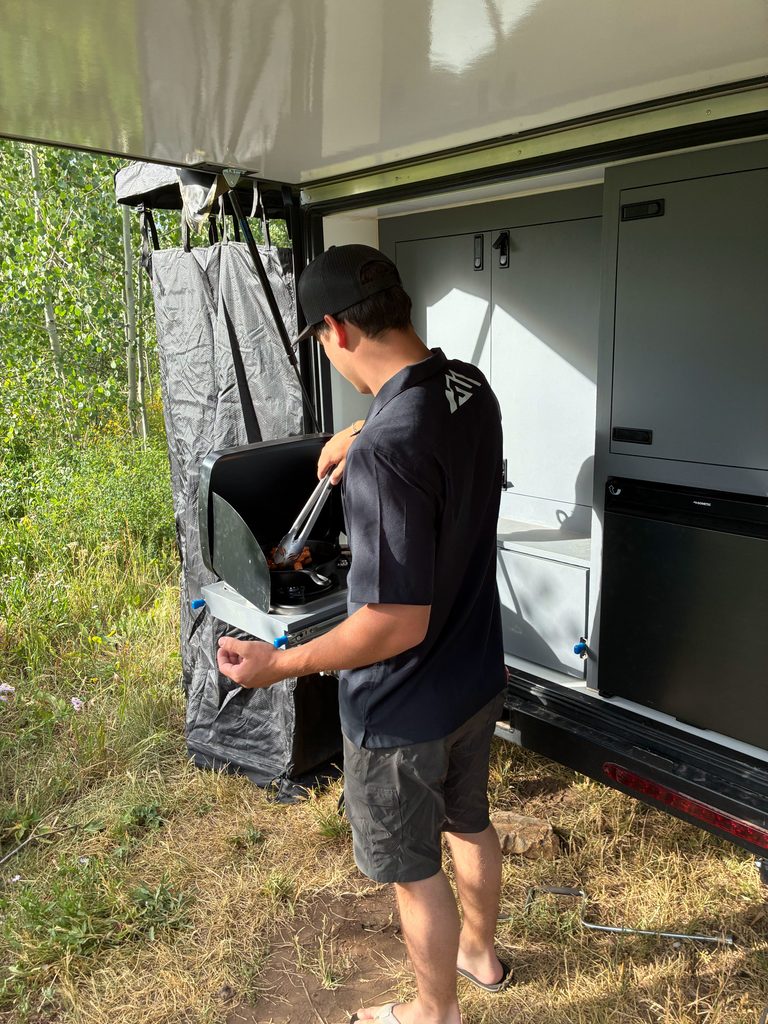
There’s a contingent of hunters who’ll say you don’t need a kitchen on a hunting trailer. Those are the same guys who are eating cold meals on day two, or eating those glorified MRE’s from outdoor stores. They are also the guys who, incidentally, have back pain, or who got no sleep because it was too cold or cows were in their camp. A functional camp kitchen isn’t luxury, it’s a force multiplier for how long and hard you can hunt.
The ROCH Pro’s rear galley slides out and gives you a real working kitchen: a 7,900 BTU stainless steel cookstove, a stainless sink with folding faucet, a working-height counter and the 55L Dometic fridge or cooler right there within arms length. The galley door is 60″ x 49″ and lockable, so everything is secure when you’re moving.
Dedicated LED lighting, 110V GFCI outlet and 12V/USB plugs at the galley — it’s a real cooking station, not an afterthought.
Awning and Exterior: Shelter Matters When You’re Out for a Week
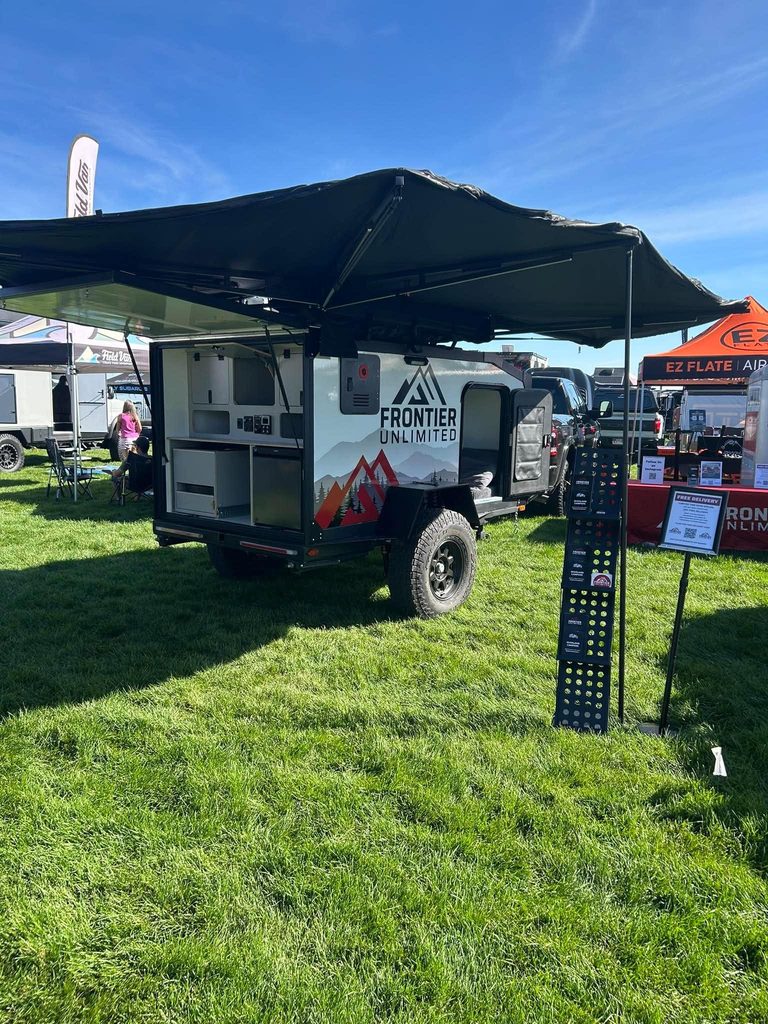
Late-season hunting means unpredictable weather. You need exterior shelter capability for processing game, keeping your gear organized, and staying comfortable when it’s raining or snowing. A small side awning is better than nothing. A real awning is better than a small side awning.
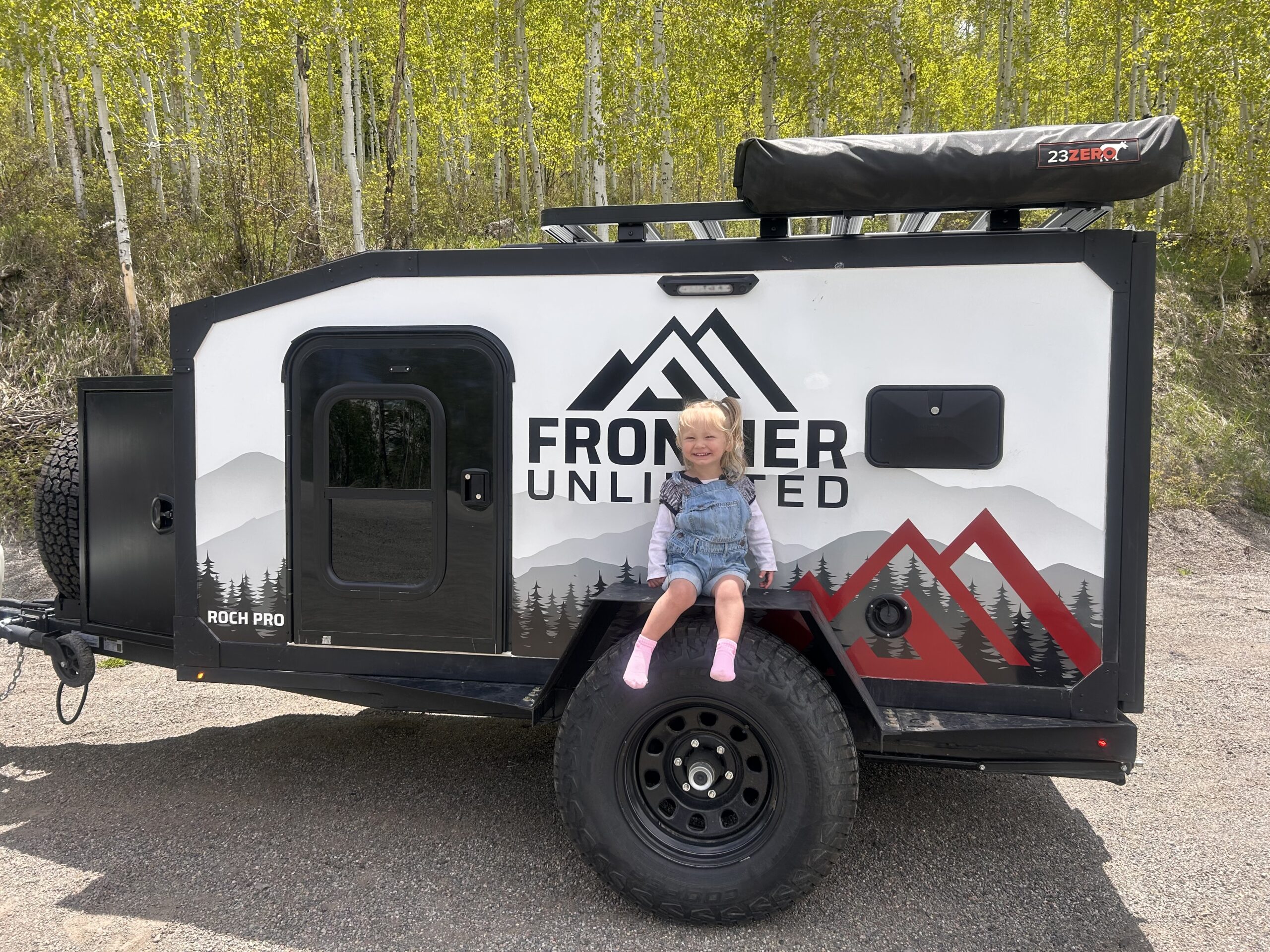
The ROCH Pro runs a 23 Zero 270-degree awning, 20′ long x 6.5′ wide. A 270-degree awning wraps the side and rear of the trailer, creating a covered workspace that dwarfs what a single side awning can do. For field dressing and hanging game, butchering, cooking, gear organization, or just getting out of the rain, it’s a real asset that pays dividends every single day of a long camp.
Recovery and Access: Getting Unstuck Is Part of the Plan
Anyone who drives remote terrain, roads that are not maintained, has gotten stuck. It’s not a question of if, it’s a question of when. A trailer that gives you recovery options is better than one that doesn’t.
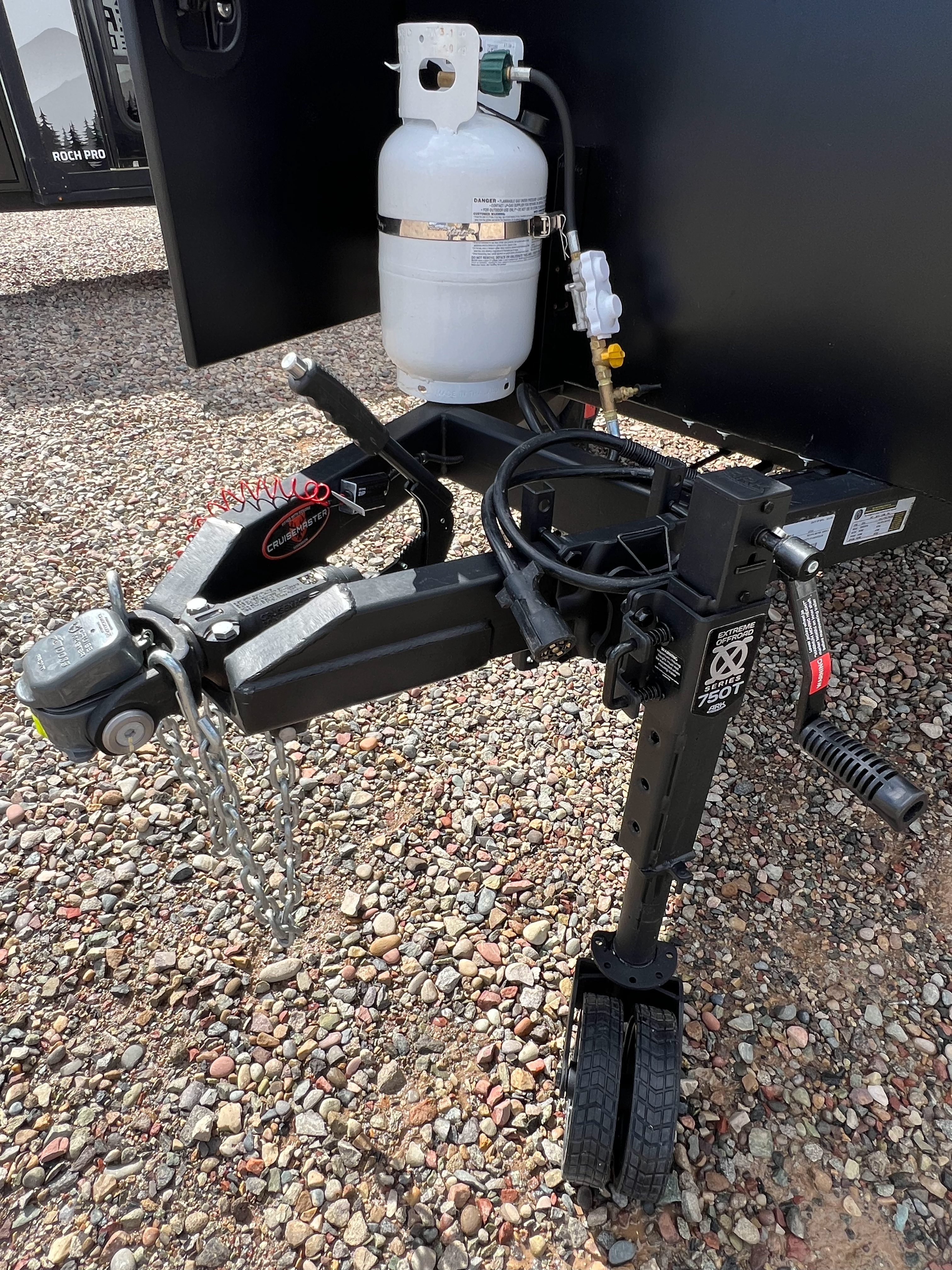
The ROCH Pro has a 2″ multi-function rear receiver hitch, attach a recovery point, a bike rack, a spare tire carrier, or anything else you might need in the back. In the backcountry, it’s not a decorative feature.
The ROCH also comes with an ARK XO-750T tongue jack with integrated wheel and rear leveling jacks, useful when you’re parked on uneven terrain, which is most of the terrain you’ll be camping on.
Safety Systems: Because It’s Remote
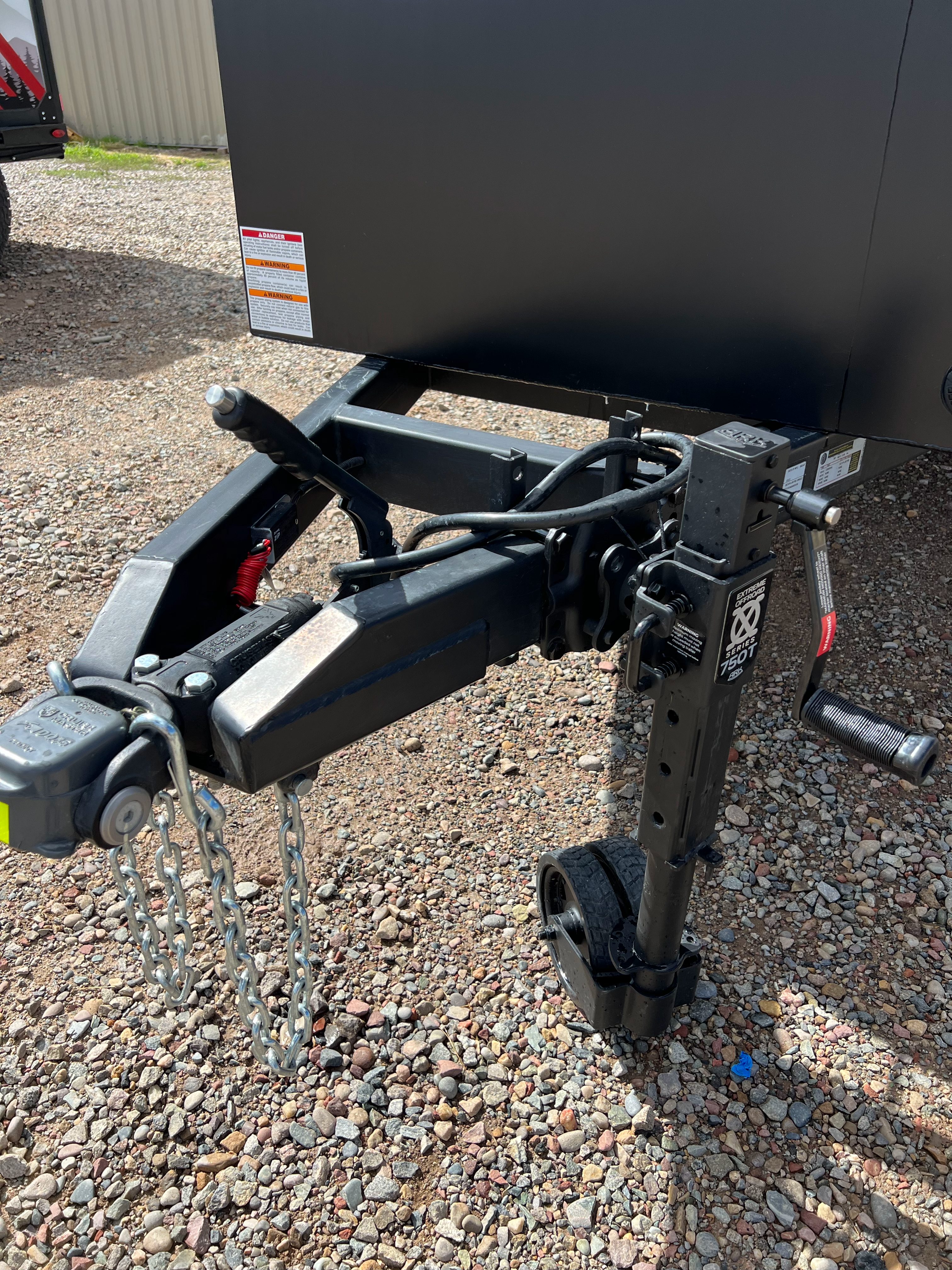
When you’re running propane appliances inside a closed camper in the backcountry, the nearest hospital and fire station are a long way off. The safety systems have to be built in.
Frontier Unlimited is an RVIA member. The RVIA seal on an overland campers shows that the camper meets over 500 safety codes covering electrical, plumbing, heating, fire safety, and life safety systems. Every ROCH Pro is built to NFPA 1192, the national standard for RV propane, electrical, plumbing, fire and life safety. RVIA inspectors show up at our shop unannounced to check that we’re actually building to this standard and to check out work. It’s the same standard the big RV manufacturers answer to, and we answer to it too.
The ROCH Pro interior includes:
- Smoke detector
- CO (carbon monoxide) detector
- Propane leak detector
- 2 lb. fire extinguisher
We don’t install these to pass an inspection, we do it because we genuinely care about you and your friends and family. When you’re running a furnace at 6,000 feet on a cold night, they determine whether you wake up in the morning.
The Backcountry Hunting Trailer Checklist: What to Demand
Before you sign anything or put a deposit down, run this list:
- Frame: Heavy-wall CNC tube steel, powder coated
- Ground Clearance: 18″+ minimum for serious off-road terrain
- Suspension: Axle-less independent — anything else is a compromise
- Coupler: Quality off-road hitch with parking brake
- Tires: Genuine all-terrain, correctly sized, with a full-size spare
- GVWR/Payload: Know what you actually haul and buy appropriately
- Shell: Composite, not wood-framed. R-9 insulation minimum for 4-season use
- Power: LiFePO4 lithium (200Ah+), solar, alternator charging, pure sine inverter
- Heating: Forced air propane furnace, 10,000 BTU minimum
- Refrigeration: Compressor fridge or cooler, 40L+
- Water: Tank of 15+ gallons, aluminum-protected, with on-demand pump
- Awning: 270-degree for real utility; side-only for basic coverage
- Safety: Smoke, CO, propane detectors + fire extinguisher
- Recovery: Rear receiver hitch, leveling jacks
The Bottom Line
Most hunting trailers on the market are built for the parking lot of a KOA. They look the part, they photograph well, use the right colors and appear bulky, and they also fall apart when you actually use them the way a serious hunter uses gear.
The Frontier Unlimited ROCH Pro was built by us, our own two hands build every camper we sell. We hunt remote terrain and we have owned and broken everything the market had to offer. Four solid years of R&D. Real off-road testing. No wood framing. No axle-based suspension. No weak solar panel on a lead-acid battery system.
If you want to see what a genuinely built backcountry hunting trailer looks like, start with the ROCH Pro. Or check out the ROCH Chassis if you want to run a custom build on the same battle-hardened platform. Compare all models at frontierunlimited.com/model-comparison.
Built in Silt, Colorado. Veteran owned. Zero corporate BS. This is the rig we actually use.
Backcountry Hunting Trailer FAQ
What should I look for in a backcountry hunting trailer?
Start with a heavy-wall steel frame, at least 21 inches of ground clearance, and axle-less independent suspension. After that, look for a composite shell with R-9 insulation, a LiFePO4 lithium power system of 200Ah or more, a forced-air propane furnace, a compressor fridge, a protected fresh water tank, and built-in smoke, CO, and propane detectors.
How much ground clearance does a hunting trailer need?
At least 15 inches for serious off-road terrain. Most consumer trailers offer 10 to 12 inches, which is fine for dirt roads and not much else. The ROCH Pro has 15 inches of ground clearance, and the ROCH Chassis has 18.5 inches.
Why is axle-less suspension better for an off-road trailer?
A solid axle sends every impact straight into the frame and over to the opposite wheel. With axle-less independent suspension, each wheel moves on its own and absorbs the hit, so components stay tight, welds stay whole, and the shell stays watertight. The ROCH runs Cruisemaster CRS2 axle-less independent suspension.
Is a composite camper shell better than wood or aluminum?
Yes. Wood framing rots and delaminates once water gets in, and metal shells dent, corrode, and carry cold into the cabin. Composite doesn’t rot or rust, takes impacts without failing, and insulates better. The ROCH Pro pairs a composite shell with a powder-coated aluminum exoskeleton and R-9 insulation.
What battery is best for off-grid hunting camps?
LiFePO4 lithium. You can use 80 to 100 percent of its rated capacity, it holds up in cold weather, charges faster, and lasts 3 to 5 times longer than lead-acid. The ROCH Pro runs 200Ah of GoPower LiFePO4 lithium, charged by solar, the vehicle alternator, and 30 amp shore power.
Can the ROCH Pro handle late-season cold-weather hunts?
Yes. The ROCH Pro has a Dometic 12,000 BTU forced-air propane furnace, 2-inch R-9 insulated walls, and a composite shell. It stays livable when overnight temperatures drop into the teens.
How much payload can the ROCH Pro carry?
The ROCH Pro is rated to 3,500 lbs GVWR with 1,350 lbs of payload capacity. The ROCH Chassis carries up to 2,620 lbs of payload.
Is the ROCH Pro built to RV safety standards?
Yes. Frontier Unlimited is an RVIA member, and every ROCH Pro is built to NFPA 1192, the national standard for RV propane, electrical, plumbing, fire, and life safety. RVIA inspectors visit our shop unannounced. Every ROCH Pro has a smoke detector, a CO detector, a propane leak detector, and a 2 lb. fire extinguisher.
Leave a Reply